Where it came from
Jean-Pierre Beauviala was an engineer at Éclair, the Paris company that had put the Cameflex and the NPR on the shoulders of documentary and New Wave crews, before he started his own firm in Grenoble. The story he told was that he could not find the right tools for a film he wanted to make, so he built them. Aaton's first 16mm camera arrived in the early 1970s, and its marketing line became famous in the trade: the camera should sit on the operator's shoulder like a cat. The comparison was not decoration. Beauviala treated balance as an engineering problem, and the idea that a film camera might be shaped around the human body, rather than the body forced to carry a machine, was close to new.
The LTR followed in the late 1970s and became the model that made the company's name. Its successors form a single family: the LTR 54, the XTR, the X0, the XTR Plus and finally the XTR Prod. They are not one camera, but they share a philosophy and a silhouette, which is why used-equipment dealers and rental houses tend to speak of them together.
What made it different
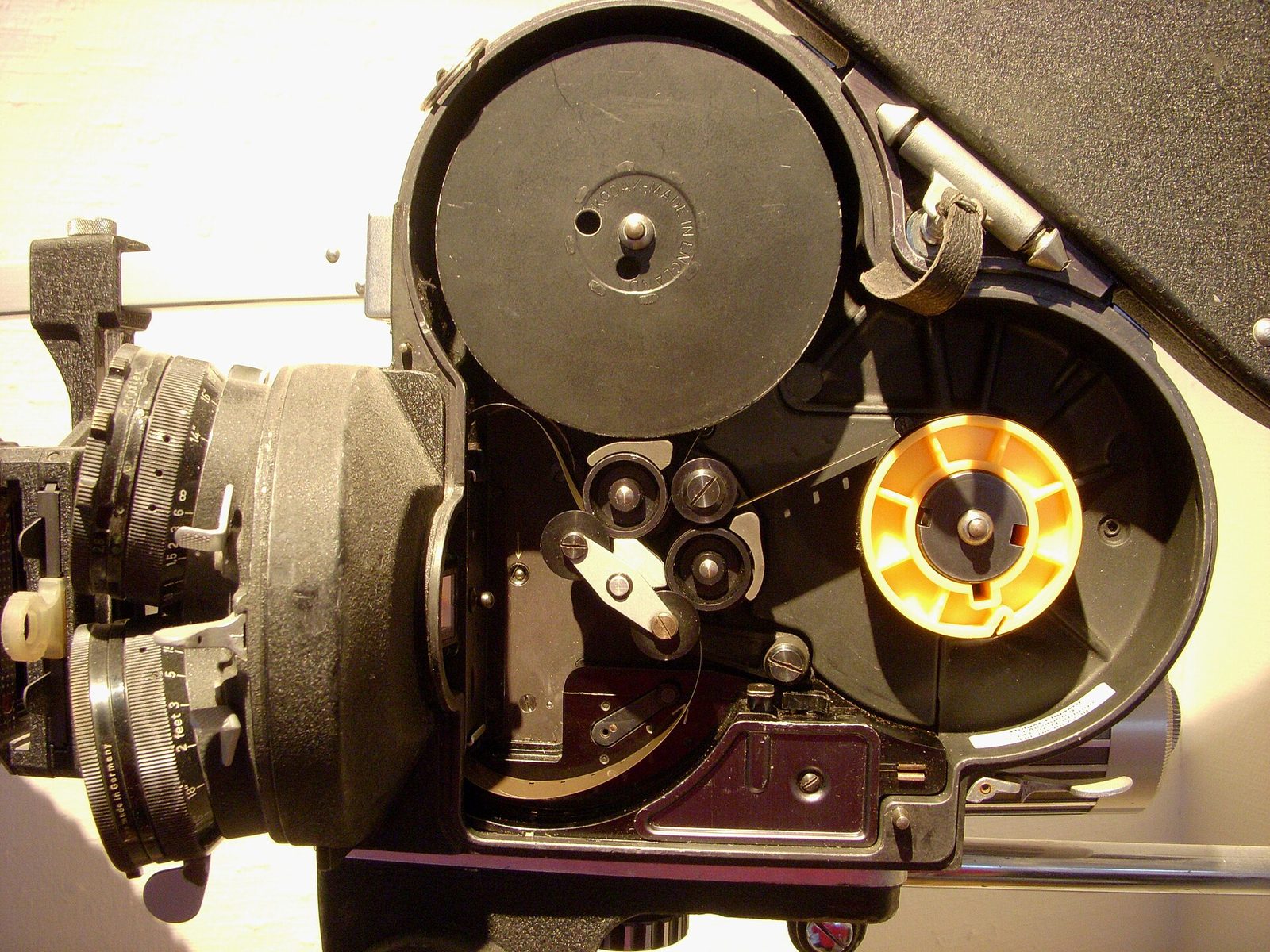
An Aaton does not look like much of a revolution on a bench. It is a compact, rounded 16mm body with the film magazine mounted at the back, which is the whole point. With the magazine behind the operator's ear, the weight of a loaded camera sits over the shoulder instead of pulling the lens end down, and a camera operator can hold it for a full day of handheld work without the fatigue that earlier cameras produced. The eyepiece sits where the operator's eye already is, and the controls fall under the hand without hunting.
It was also a quiet camera, which mattered enormously for synchronized sound. Documentary and drama crews recording dialogue on location could not afford a noisy mechanism, and the Aaton's low-noise movement meant that scenes could be shot without a heavy blimp around the body. Super 16 was another part of the story. Swedish cinematographer Rune Ericson had devised the wider frame, which uses the area normally reserved for the optical soundtrack, and Aaton cameras were among those on which it became practical, giving filmmakers a negative that could be blown up to 35mm for theatrical release.
Then there was AatonCode. Beauviala's company developed one of the earliest systems for printing timecode into the margin of the film itself, as a machine-readable code exposed alongside the picture. It allowed the camera negative to be matched to separately recorded sound with a precision that clapperboards and sync marks could not offer, and it made the Aaton a natural partner for the company's own Cantar sound recorders. In an era when film was moving through video editing systems, a camera that spoke timecode was an enormous convenience.
Who used it and what they shot
The Aaton became the working camera of a certain kind of filmmaker: documentarians, independent directors, and cinematographers who wanted a film look with a lightweight rig. Jean-Luc Godard was photographed in 1982 with an LTR in Super 16, a reminder that the camera was accepted early by the generation that had made the New Wave with Éclair equipment.
In the 2000s the later XTR Prod carried an impressive amount of filmmaking. Elliot Davis shot Thirteen on Super 16 with Aaton cameras in 2003. Hirokazu Kore-eda's Nobody Knows, released in 2004, was shot on an XTR Prod, and the penguin documentary March of the Penguins, in 2005, used two of them in extreme Antarctic conditions. Kathryn Bigelow's The Hurt Locker, shot by Barry Ackroyd in 2008, is the picture most often cited today. Ackroyd has said that four, sometimes five, Aaton cameras were used on the shoot, and he has called the Aaton his go-to camera and a companion on hundreds of documentaries. Leos Carax's Holy Motors was also shot with Aaton cameras. That is a remarkable range for a design whose basic architecture dated to the 1970s.
Its rivals and what replaced it
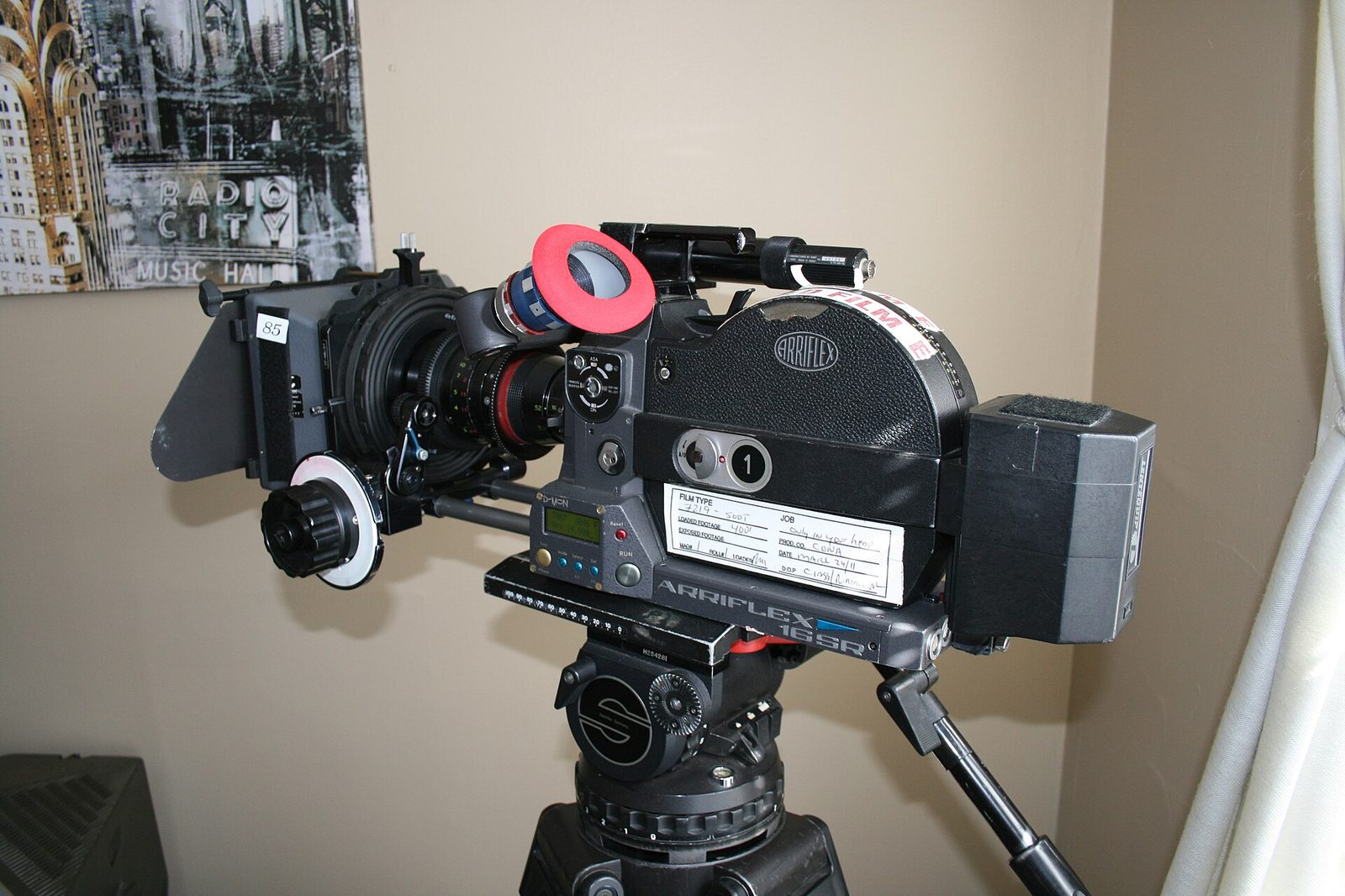
The Aaton's great competitor was the Arriflex 16SR, the camera pictured above, a well-built German machine that dominated rental houses and television drama. The Éclair ACL, a lighter French camera with a coaxial magazine, was the other obvious alternative. Crews argued about which was better, and the argument was usually settled by what a given camera operator had learned on. The Aaton was prized for its handling; the Arriflex for its reliability and ubiquity.
The successors Beauviala himself drew up were more ambitious. The Penelope, a 35mm camera that could be switched in the field between two-perf and three-perf pulldown, went on sale in 2008. The A-Minima was a small Super 16 camera taking 200-foot loads. A digital camera, the Delta, grew out of the idea of replacing the Penelope's film magazine with a recorder, with a rotating mirror shutter to avoid rolling-shutter artifacts and a ground-glass optical viewfinder. But Beauviala blamed defects in the controller for the Dalsa sensor for delays in delivery, and in April 2013 Aaton went into receivership. Transvideo bought the company in June of that year, and it became Aaton Digital. The XTR Prod was still in use in 2015 alongside a newer film camera, the Xterà.
Why it still matters
Beauviala was honored by the American Society of Cinematographers in 2018 for his contribution to the craft, and the citation was apt. A good deal of what modern camera makers say about ergonomics, from shoulder pads and rear-weighted bodies to the way a digital cinema camera sits against the operator's head, goes back to the idea that Aaton made into a product. Anyone who has handled an ARRI Alexa Mini on a handheld rig has benefited from that conversation.
As used gear, the Aaton family is among the most practical entry points into 16mm film. Prices depend heavily on the model and the condition: the XTR Prod commands the most, and an LTR or early XTR is the budget route. Many examples still run, but they are mechanical and electronic instruments that are now decades old, and the supply of trained technicians is smaller than it once was. A buyer should check the gate and pressure plate for scratches, run the camera at several frame rates and listen for the movement, confirm that the viewfinder is bright and clean, test the magazines and the motor under load, and ask whether the AatonCode head and the original battery system are intact. Ask for a camera test on film rather than trusting a seller's word. A well-kept Aaton is still a working tool, and it still sits on the shoulder like a cat.