Where it came from
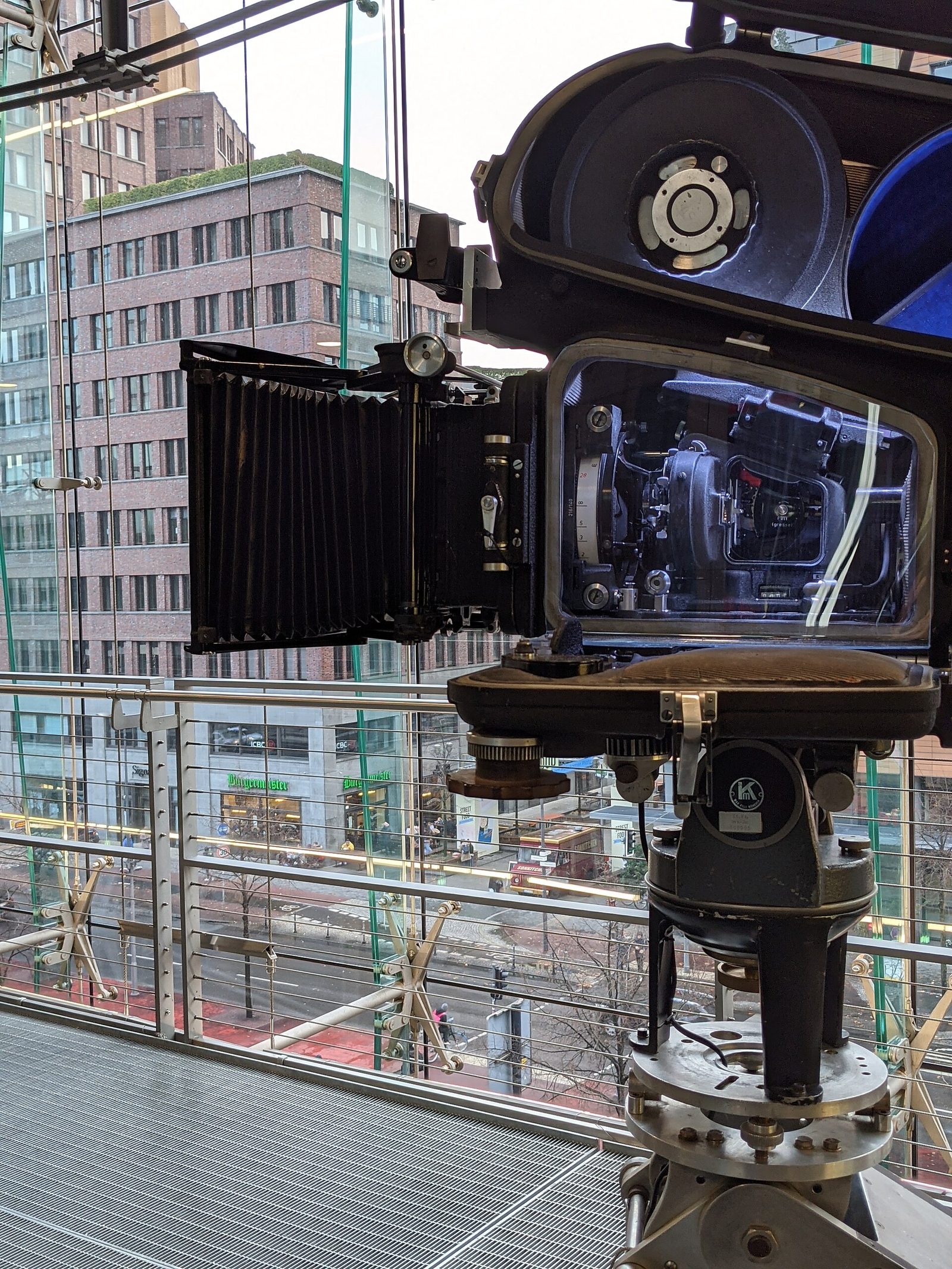
In 1917, two young Munich film enthusiasts named August Arnold and Robert Richter founded a small workshop, Arnold & Richter Cine Technik, that would eventually be known by the first two letters of each surname. They made lights, printers, and by 1924 a compact 35mm camera called the Kinarri. But the machine that put the company on the map arrived in 1937, and its name was a compound of the founders' initials and the word reflex: the Arriflex 35.
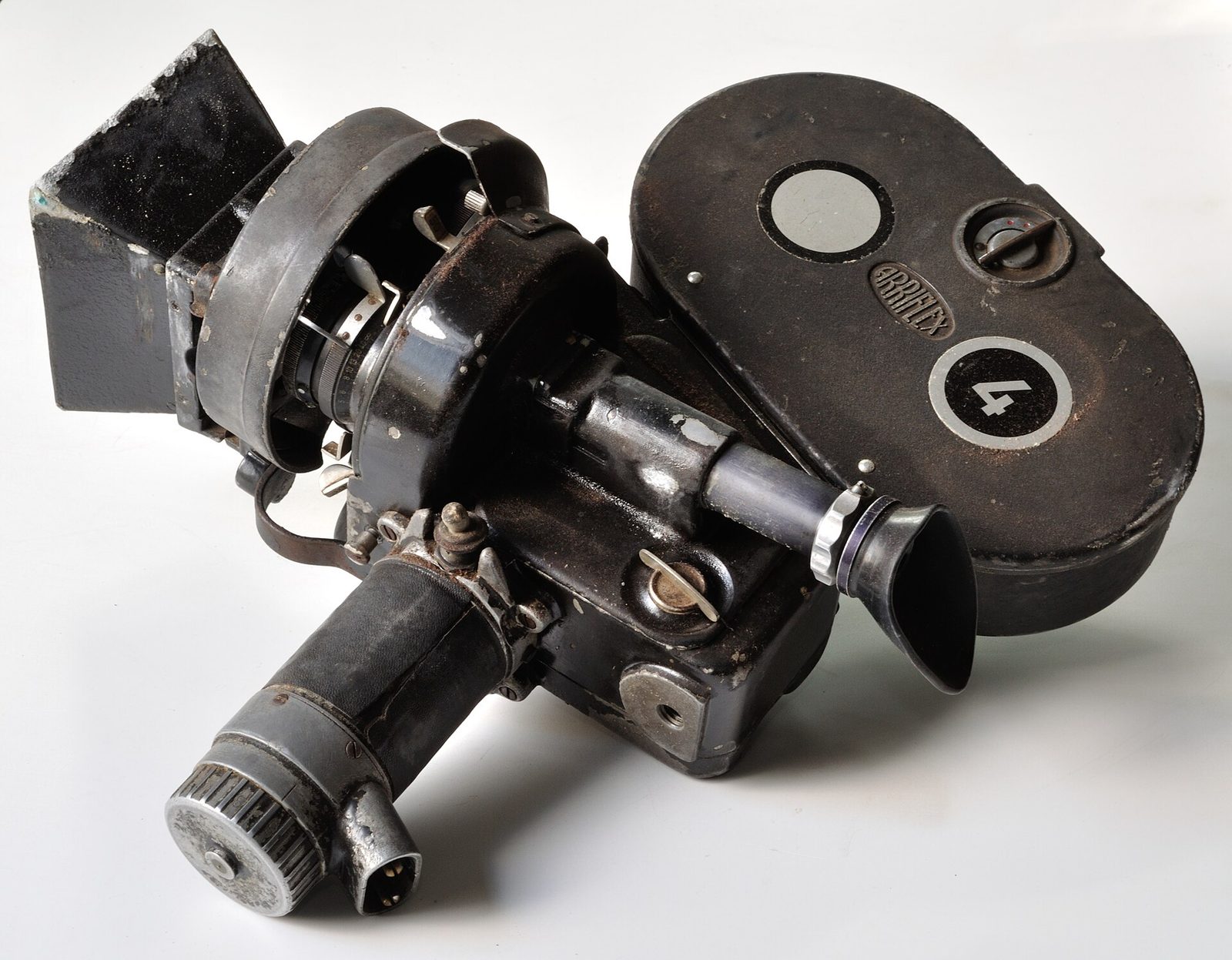
It was small, hand-holdable, and shaped like nothing Hollywood was using. The studio cameras of the day, the Mitchells and the Bell & Howells, were heavy instruments meant to sit on a head and be pushed on a dolly. The Arriflex, with its pistol-grip base, three-lens turret, and 200-foot magazines mounted on top, looked more like something you would carry into a crowd. That was the idea.
The mirror shutter
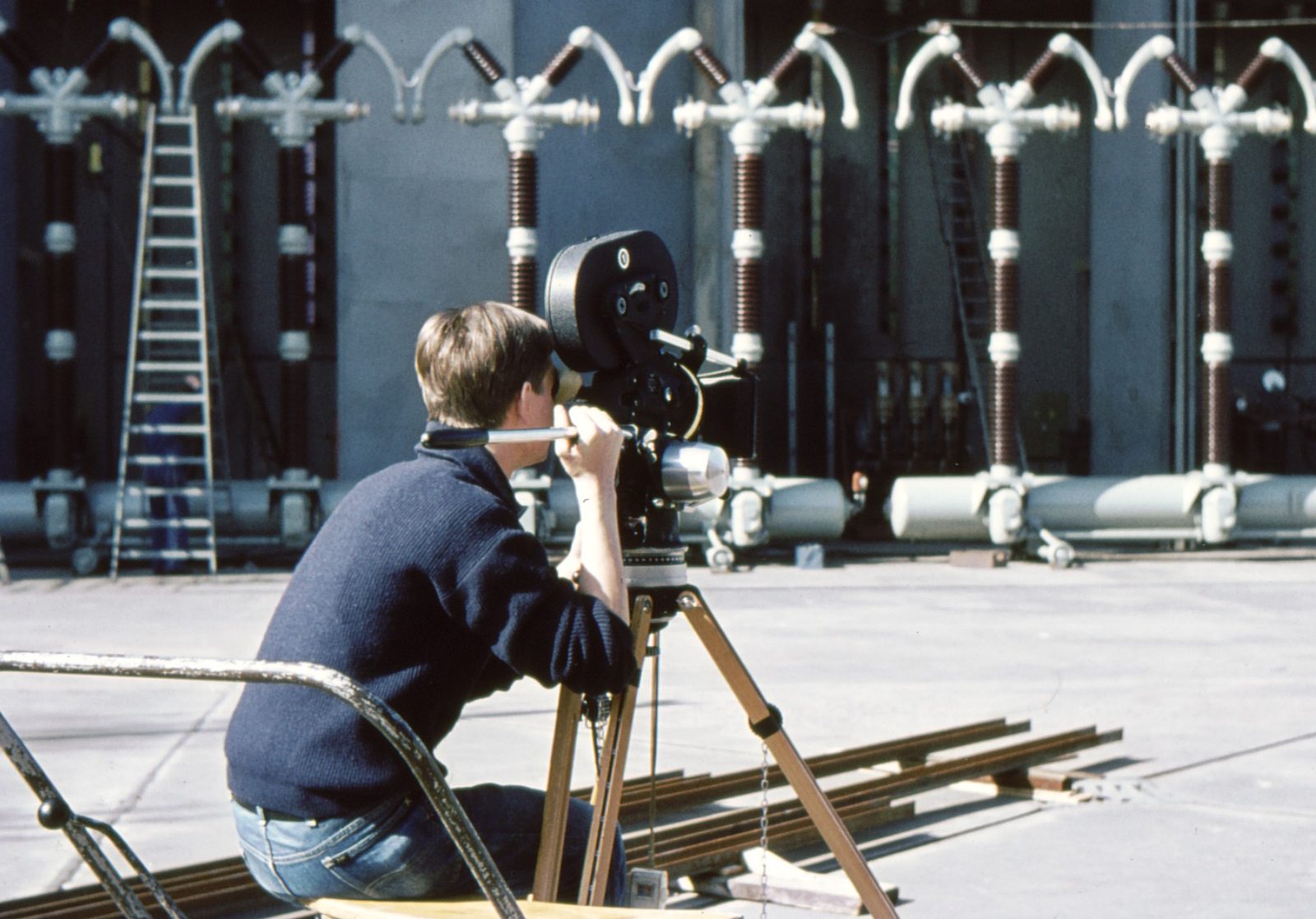
What made the Arriflex 35 matter was inside it. Chief engineer Erich Kästner designed a rotating shutter with two mirrored blades set at 45 degrees to the lens axis. As the shutter spun, its mirrored surface reflected the image coming through the lens up into a ground glass and eyepiece while the film was being advanced, then swung out of the way to expose the frame. The operator saw exactly what the lens saw, through the taking lens itself, with no parallax and no guesswork about focus or framing.
Before the reflex mirror shutter, operators used side-mounted viewfinders that approximated the lens's view, or rack-over systems that shifted the entire camera body sideways to put a viewing tube behind the lens for lining up a shot, then shifted it back to roll. Kästner's mirror let the operator watch focus and composition while the camera was running, at the cost of a flicker in the eyepiece that every Arriflex operator learned to ignore. The design was so fundamental that the Academy of Motion Picture Arts and Sciences gave Arnold & Richter Scientific and Technical Awards for it twice, in 1966 and again in 1982, and the spinning mirror lived on in Arri film cameras for the next seven decades.
War, then Hollywood
The Arriflex's first proving ground was not a movie set. It became the standard camera for German newsreel and combat cameramen during the Second World War, precisely because it could be shouldered and carried where a tripod could not go. When the war ended, Allied troops came home with captured Arriflexes, and the cameras began turning up in the United States as spoils of war before Arri had any formal export business there.
The film most often cited as the camera's Hollywood debut is Dark Passage, the 1947 Warner Bros. noir starring Humphrey Bogart and Lauren Bacall. Director Delmer Daves obtained a captured Arriflex through the U.S. government, and cinematographer Sidney Hickox used it for the film's extended first-person passages, in which the audience sees through Bogart's eyes as he escapes San Quentin and moves through San Francisco. A light reflex camera made the subjective technique fluid rather than stunt-like, and the San Francisco location work benefited just as much. Over the following decade the Arriflex became the American industry's go-to for second-unit, car-mount, and handheld work, the shots the big Mitchells could not physically get.
The IIC and the New Wave
Arri refined the camera steadily after the war. The 35 II appeared in 1946, the IIA in 1953, the IIB in 1958, and in 1964 the version that became the definitive one: the Arriflex 35 IIC. It brought an improved pull-down claw, a larger and user-removable ground glass that could accommodate anamorphic framing, and a bigger viewing system with a detachable eyepiece. It had no internal electronics at all. Power came from an external motor, and the body itself was a simple, dense, nearly indestructible piece of machining.
Filmmakers loved it for a different reason. The late 1950s and 1960s were the years when directors around the world decided that cinema could leave the studio, and the Arriflex 35 II was the camera that let 35mm come along. A Mitchell BNCR needed two people to lift; an Arriflex could be operated by one person standing in a doorway or riding in the back seat of a car. The cinéma vérité and direct cinema documentarians, the European new waves, and the independent Americans who followed all leaned on it. When Dennis Hopper shot Easy Rider in 1969, cinematographer László Kovács used a 35 IIC that belonged to his friend Vilmos Zsigmond, and the film's handheld, flare-streaked, documentary energy helped open the door to the New Hollywood of the 1970s.
The IIC's most famous devotee was Stanley Kubrick, who owned his own and used it on virtually every film from the 1960s onward. He shot most of A Clockwork Orange with his IIC cameras, operating the handheld material himself, and he reached for it whenever the Mitchell was too big, as on the cramped B-52 set and the Burpelson base assault in Dr. Strangelove. Because the camera was simple and rock-steady in registration, it also became a workhorse of visual effects, with IICs used on the original Star Wars trilogy and modified bodies staying in effects houses long after production crews had moved on.
What replaced it
The Arriflex 35's one unfixable flaw was noise. The mirror shutter, the claw, and the exposed magazine made a racket that no dialogue recordist could tolerate, so IIC footage was shot MOS, with sound added later, or the camera was buried inside a heavy blimp that erased its whole advantage. In 1966 Arri began developing a camera that would be quiet on its own, and in 1972 it released the Arriflex 35BL, the first self-blimped 35mm handheld camera. At about 33 pounds it could be shouldered and run beside a boom microphone, and its debut at the 1972 Munich Olympics gave it an immediate global showcase. Films like Taxi Driver, Days of Heaven, and Apocalypse Now were shot with it. Together with Panavision's Panaflex, the 35BL made the studio Mitchell obsolete and cemented Arri's dominance in professional motion picture cameras, a position it has held through the 35 III, the 435, the Arricam, and the digital Alexa.
Why it still matters
A working Arriflex 35 IIC today typically sells for somewhere between $1,500 and $5,000, depending on condition, motor, and what comes in the case. A bare body with a standard mount and a tired variable-speed motor sits at the low end; a serviced body converted to a PL mount with a crystal-sync motor and a few 400-foot magazines sits at the high end. That is remarkably little for a camera that shot Easy Rider and A Clockwork Orange, and it reflects the fact that they are not rare. Arri built well over ten thousand of the 35 II series, and because they contain no electronics, most of them still run. Student filmmakers, music video crews, and directors chasing a specific handheld texture continue to put them to work.
Every camera that followed inherited something from it. The spinning mirror reflex viewfinder was standard on professional film cameras until film itself gave way, and it was even built into the Alexa Studio so operators could keep an optical viewfinder in the digital age. The compact, shoulder-friendly form factor, the modular magazine, the idea that a 35mm camera should be something one person can carry into the world rather than a fixture of a soundstage: all of it traces back to Munich in 1937, to a small camera with a mirror in it that let the operator see exactly what the film would see. The Arriflex 35 did not just change how movies looked. It changed where they could be made.