Where it came from
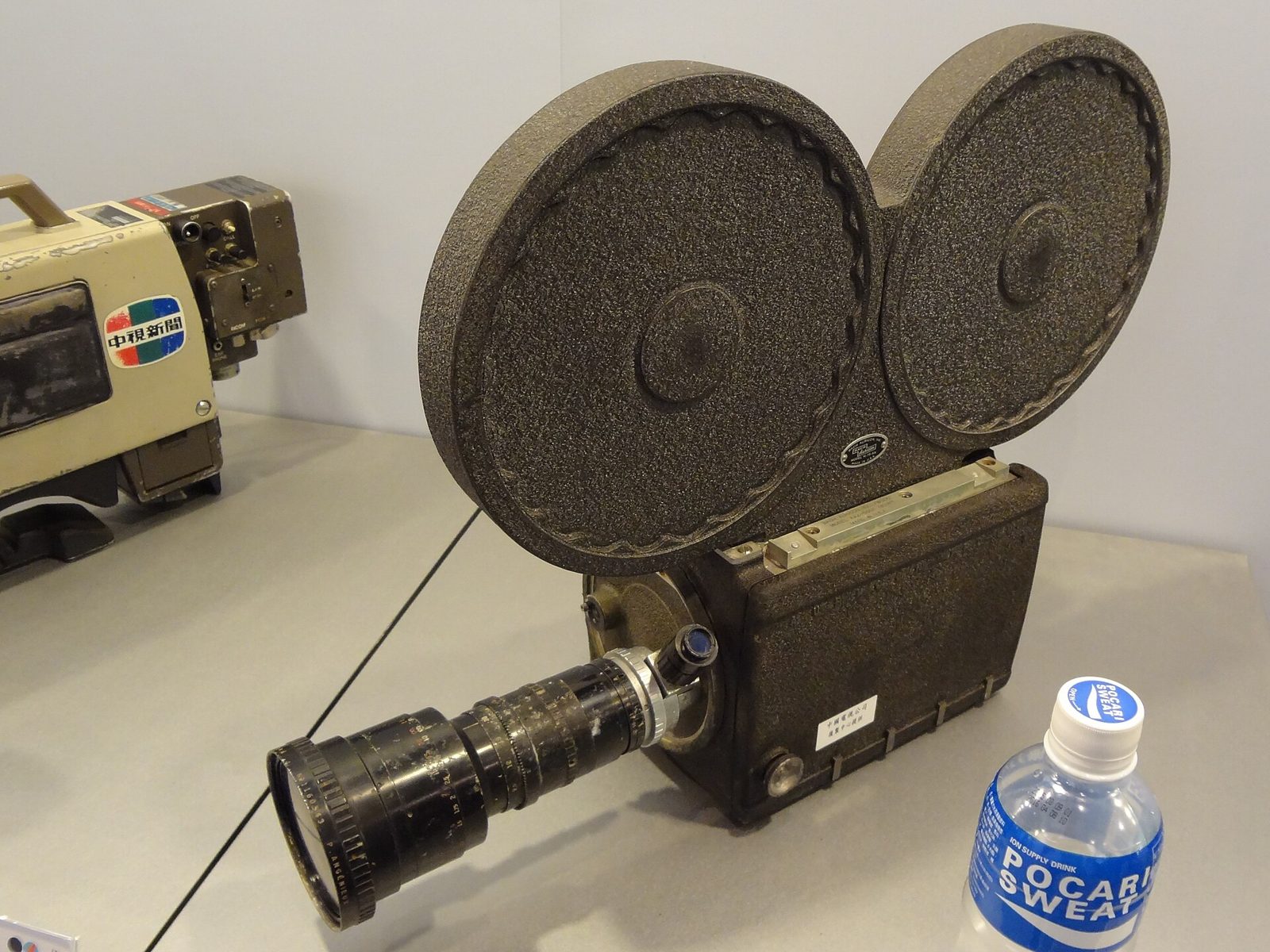
Before television news had videotape, it had film, and before it had film that could talk, it had a problem. Newsreel crews of the 1930s shot silent footage on 35mm and added narration later. Sound required a second machine, a second operator and a cable of synchronization to hold them together. The Auricon was the answer to that problem, and for roughly three decades it was the standard way to put a talking face on a local news broadcast.
The company traces back to the early 1930s, when engineer Eric Berndt, who designed motion picture equipment, and John Maurer, who had worked on sound recording at RCA, began building 16mm sound cameras together. Walter Bach joined in 1939 as the business moved to Los Angeles, Berndt left in 1940, and the first cameras carrying the Auricon name appeared in the early 1940s. Wartime work for the military followed. After the war, the same machines found a second life in a market nobody had anticipated: television stations that needed to fill a newscast and had no way to do it cheaply.
What made it different
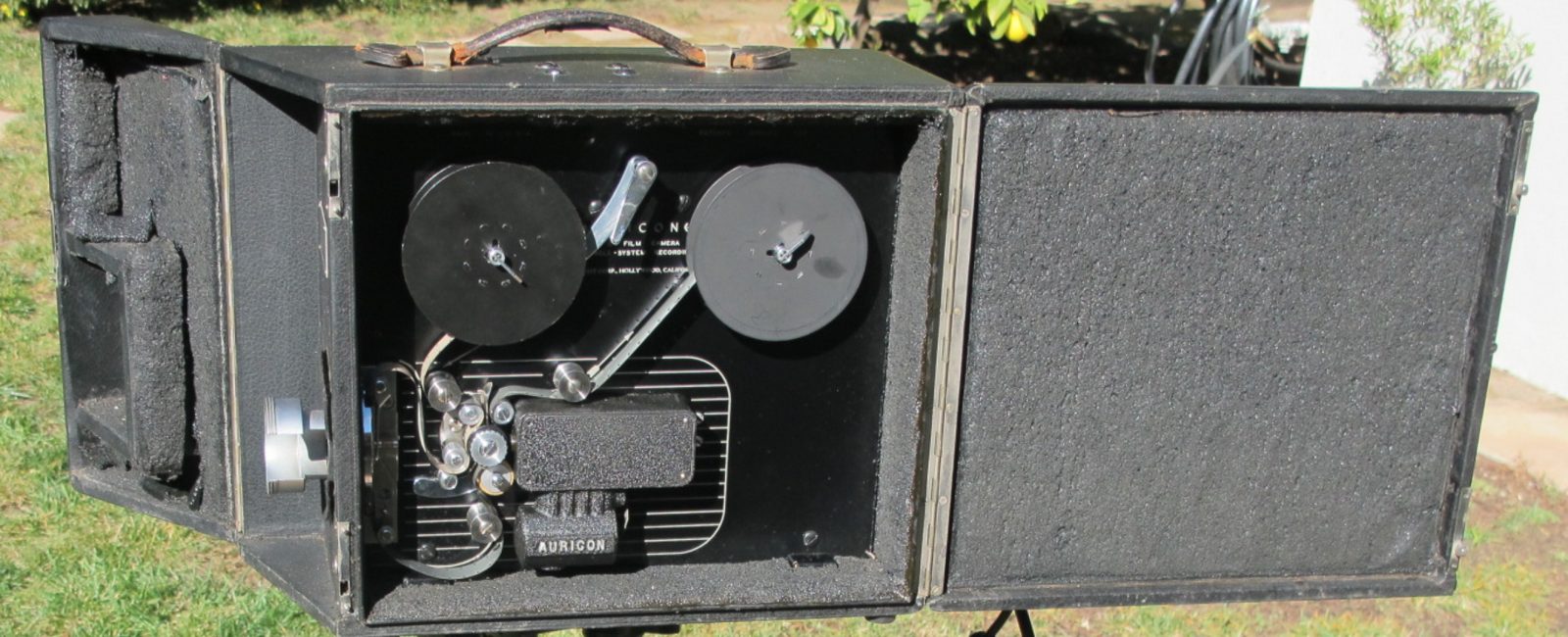
The Auricon was a single-system camera. Picture and sound were recorded onto the same strip of 16mm film at the same moment, so there was nothing to sync and nothing to lose. In its optical form, the audio was written as a track along the edge of the film by a light valve, a mirror galvanometer that modulated a beam of light in time with the signal from the microphone amplifier. The sound was recorded 26 frames ahead of the picture, a fixed offset that the lab and the projector both understood, and the film arrived at the station ready to run.
In the mid-1950s the company added magnetic recording, sold as Filmagnetic, on film that carried a stripe of oxide. Magnetic sound was quieter and could be erased and re-recorded, but many news cameramen stayed with the optical models, which were easier to process and known to work.
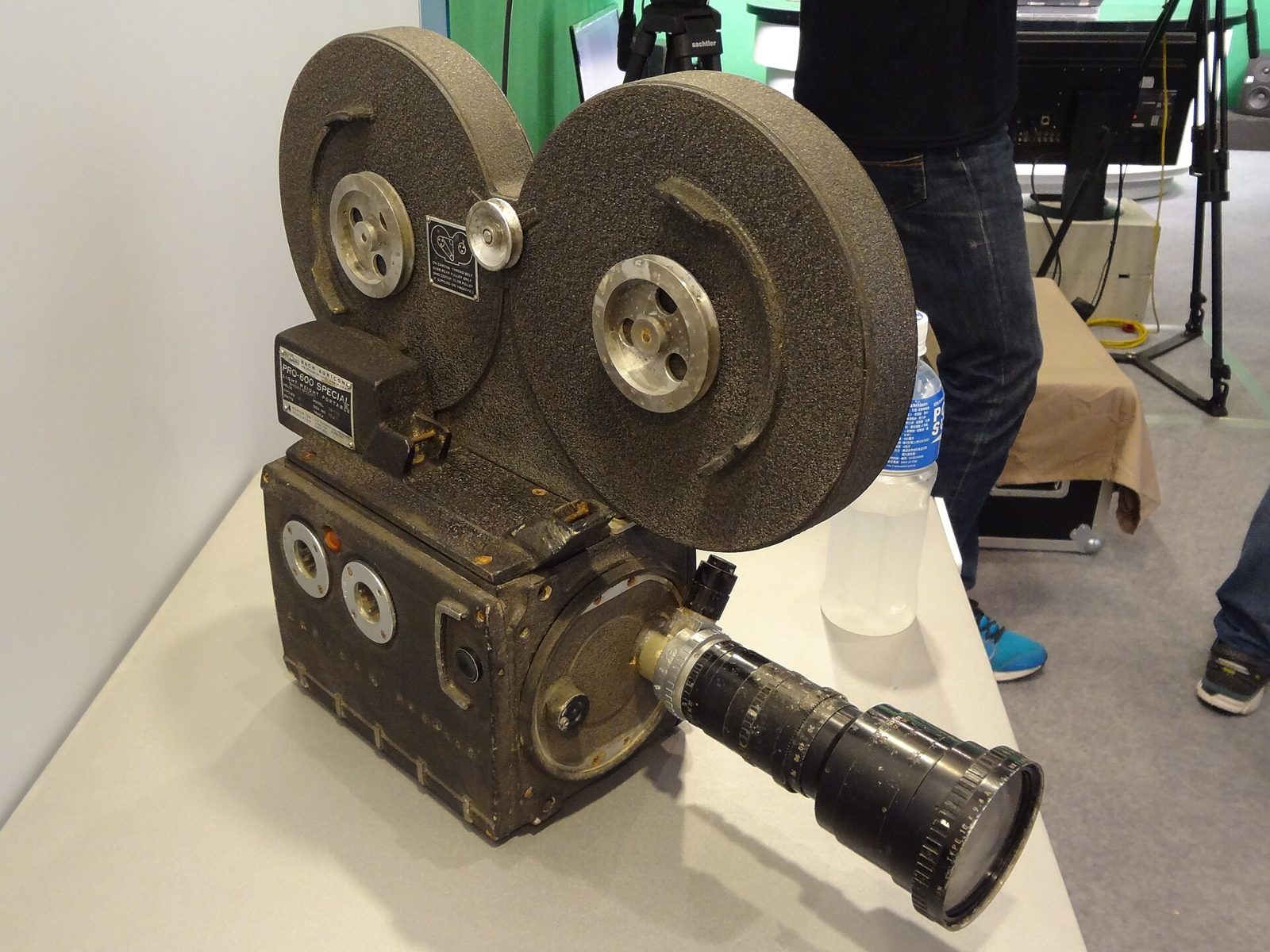
The Cine-Voice came first and was the machine that spread the idea. It was a boxy, non-reflex camera with a viewfinder offset from the lens, so what you framed and what you shot were slightly different, and it relied on a battery-powered external amplifier and a microphone. It was not light, and it was not quiet in the way a modern camera is. What it offered was the ability to run long takes with synchronized sound, at a price an independent filmmaker or a small station could manage. In 1955 the Pro-600 followed, designed around the working habits of news crews, with a 600-foot magazine good for roughly a quarter of an hour of running time and a body arranged to be carried and set up quickly. Later models extended the line, including the Super-1200, whose 1,200-foot magazines held about 33 minutes of film.
Who used it and what they shot
For most of its working life the Auricon was a news camera, and most of what it shot was ephemeral: city hall, a house fire, a candidate on a platform, an anchor reading a script to a lens. That footage has largely vanished, but it shaped what viewers expected from television. A person on screen speaking to the camera, with real room tone behind them, became the grammar of the evening news in large part because a camera like this made it affordable.
The independent and documentary world noticed quickly. The cameras that Richard Leacock and D. A. Pennebaker used in the Direct Cinema experiments around Primary (1960) were modified Auricons, adapted with the help of Maurer to make a synchronized-sound camera that could be carried through a crowd. The result is often cited as a turning point, the moment when documentary stopped staging events for the lens and started following them.
The same long-take capacity appealed to filmmakers who wanted to simply let a camera run. Andy Warhol shot Empire (1964), a static, hours-long view of the Empire State Building, on an Auricon, and the machine went on to serve in his later sound films with Paul Morrissey. Shirley Clarke recorded Portrait of Jason (1967), a feature built almost entirely from one man talking to the camera over a single night, on Auricon equipment as well. The very limitation that made the camera awkward, a big, loud, self-contained box that wanted to sit on a tripod and run, suited filmmakers who treated duration as an aesthetic.
Its rivals and what replaced it
The Auricon was never the only 16mm option. Bolex and Arriflex cameras were lighter and more flexible but silent, so they depended on separate sound recorders. Éclair's NPR and later the Cinema Products CP-16, a reflex camera with built-in sound capability, attacked the Auricon's market from above, combining portability with the single-system approach. By the 1970s the CP-16 had become the documentary standard, and Bach closed the company in the late 1970s.
The deeper replacement was video. Portable tape machines made it possible to shoot a story, play it back on the spot and send it to air without a lab, and television news abandoned 16mm film within a few years. The ENG revolution that began in the 1970s finished the job. The Auricon, designed for a world in which sound had to be written onto film, was left behind by one in which sound was simply another signal on tape.
Why it still matters, and what one costs
Its influence runs through everything that came after. The idea of a self-contained camera that records sound with picture, and delivers a finished take to the editor with no sync step, is the idea behind every camcorder. The documentary tradition it helped create, in which the filmmaker works alongside events rather than directing them, is still the working method of most observational filmmaking.
On the used market, Auricons remain easy to find and generally inexpensive compared with other cameras of their era. Pro-600 and Cine-Voice bodies turn up regularly from estates and old station stock, usually with a lens, a magazine or two and sometimes a case. The price depends mostly on what comes with the camera: an original amplifier, matching lenses and working magazines add considerably to the value of a body on its own. The mechanical side is robust, and many examples still run. What to check is the motor and governor, the condition of the magazine belts and rollers, and whether the amplifier and optical sound unit are present, since those parts are the hardest to replace. Collectors and filmmakers should also keep in mind that magnetic stock for the Filmagnetic models has been discontinued, which makes optical sound the more practical choice for anyone shooting film today.