Where it came from
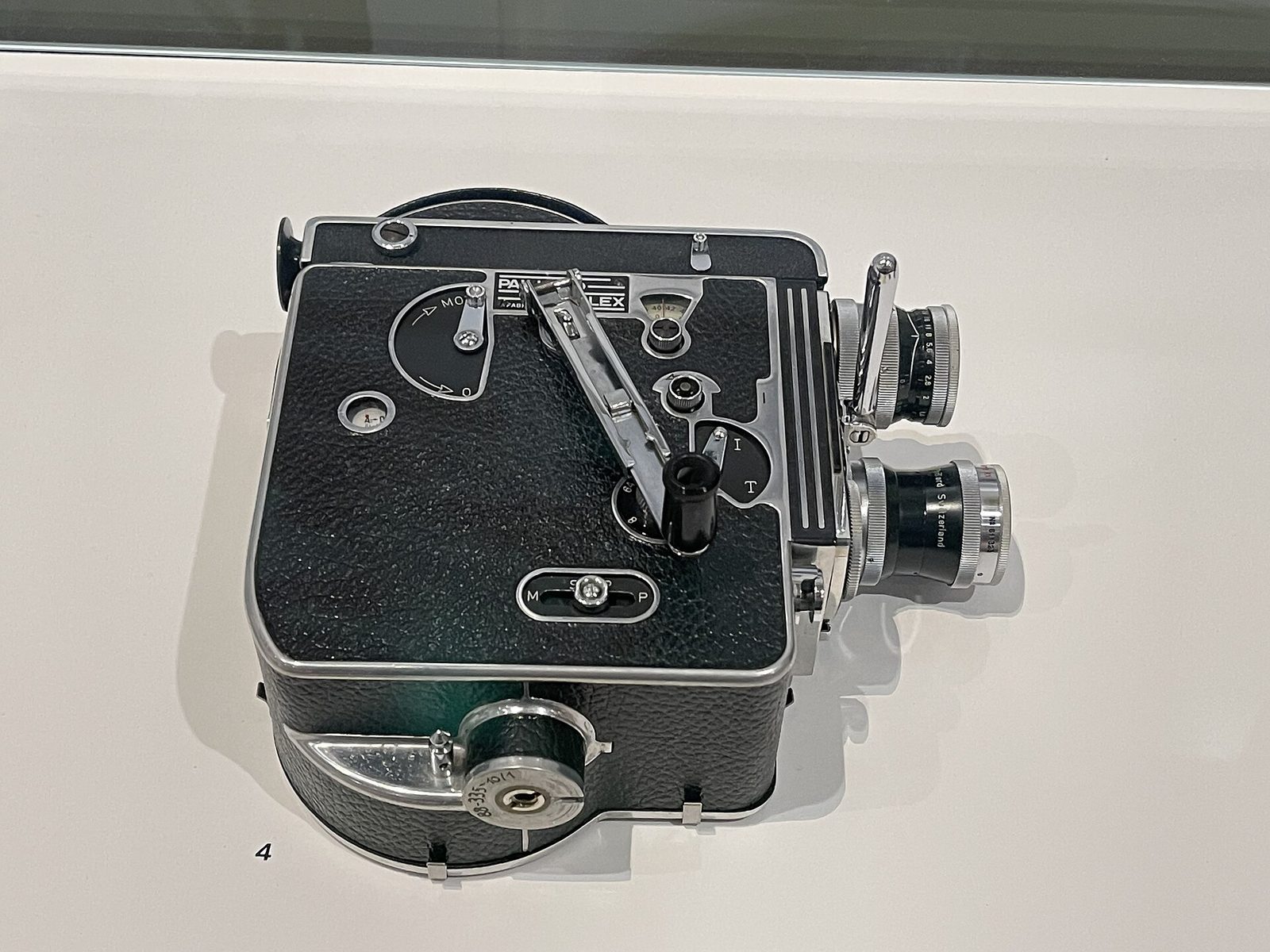
The Bolex story starts with a Ukrainian-born engineer, Jacques Bogopolsky, who built his first small cine cameras in Geneva in the mid-1920s and gave the brand its name by way of his own: Bol, then Bolex. A company was formed in 1927 with a Geneva businessman, Charles Haccius, as backer, and a couple of years later the Swiss firm Paillard, better known for typewriters and music boxes, bought it. Paillard had the factory capacity and the precision-machining culture that the little cameras needed.
The camera that made the name arrived in 1935. The H16, designed in the early 1930s by Marc Renaud and Professor Ernest Juillard, was a 16mm spring-driven camera built for amateurs who wanted something closer to a professional tool. Sixteen-millimeter film had been introduced by Kodak in 1923 as a cheaper, safer alternative to 35mm, and for a decade it had mostly meant home movies. The H16 was the first camera that made the format feel like a serious option for someone with a story to tell and very little money.
What made it different
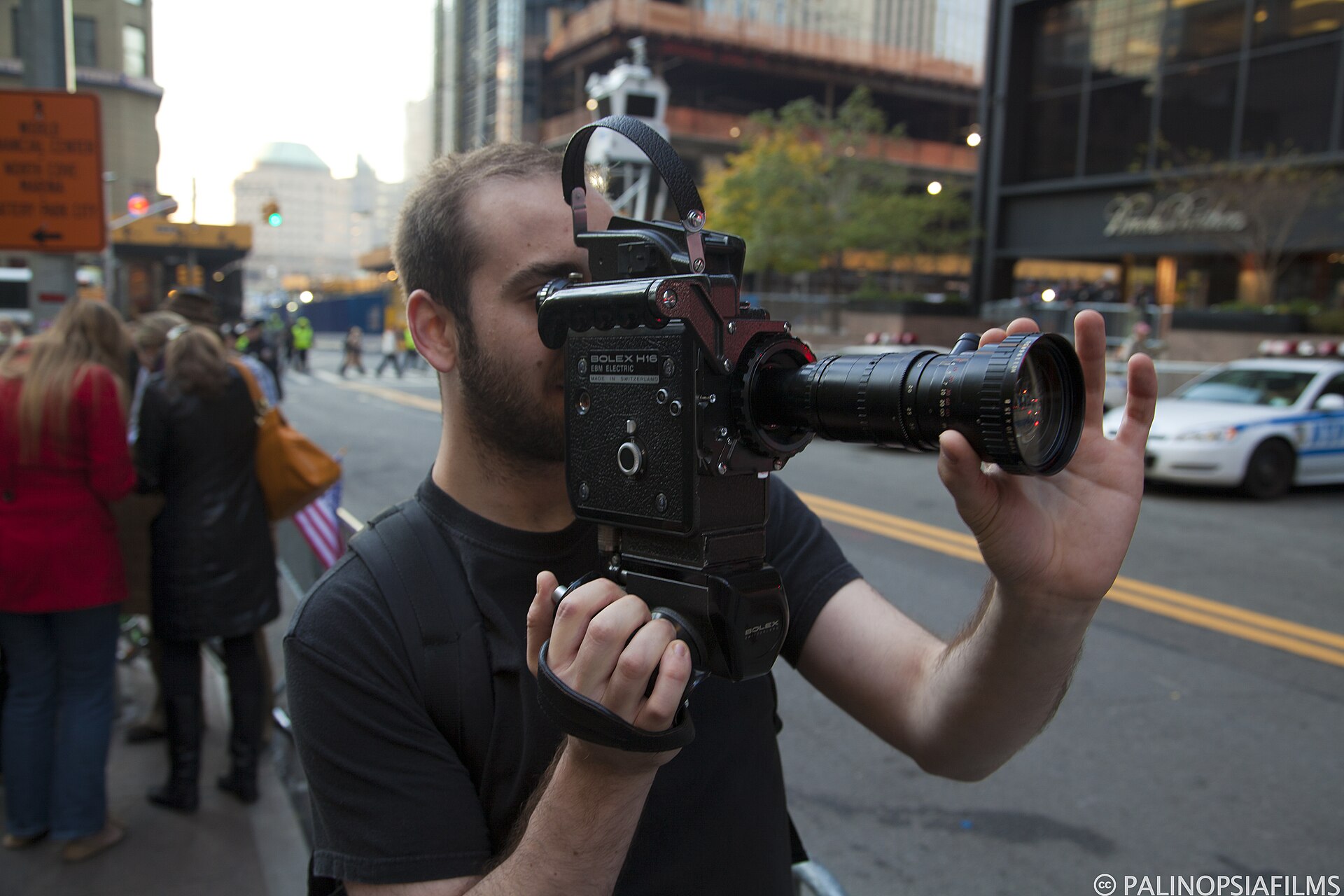
Almost everything about the H16 is a matter of packing a lot into a small casting. A three-lens turret carries wide, normal and telephoto glass, all in the standard C-mount, so changing focal length is a quarter turn of the hand. A spring motor, wound by a folding crank on the side, runs the film without batteries or cables, and the speed can be varied continuously, from slow-motion rates up to around 64 frames per second on many models. A variable shutter lets the operator fade in and out in camera. And a single-frame release, built into the H-series cameras since the 1940s, turns the camera into an animation stand.
The decisive improvement came in the mid-1950s, when Paillard introduced the reflex H16. Earlier cameras used a separate viewfinder, with the parallax errors that implies. The reflex version split a little of the light from behind the lens to the eyepiece, so the filmmaker saw what the film would see, whatever the lens, and could focus on the image itself. Later Rex models added larger magazines in place of the 100-foot daylight spool, which stretched a single load from about two and a half minutes to around eleven; the RX-5 followed in 1966.
None of this made the Bolex quiet, or steady, or easy. It is a clockwork camera with a noticeable running noise, and a single wind of the spring runs only a short take. But those limits shaped a way of working: short takes, planned shots, and a constant feel for the mechanism under the hand.
Who used it and what they shot
The H16 became the camera of American and European experimental cinema because it was affordable, rugged and complete. Stan Brakhage, Maya Deren, Marie Menken and Jonas Mekas are among the names routinely associated with it, and the film historian's shorthand for the 1950s and 1960s New York avant-garde is hardly complete without a Bolex somewhere in the picture. Mekas, in particular, kept shooting his diary films on a spring-wound Bolex for decades, using the camera's short takes as a kind of visual handwriting. The ability to hand-crank a few frames, stop, cut in-camera and double-expose gave artists a vocabulary that more expensive cameras could not match.
It also had a long second life as the camera of film school. A remarkable roster of directors, among them Ridley Scott, David Lynch, Terry Gilliam, Peter Jackson and Spike Lee, are on record as having started on a Paillard-Bolex. Peter Jackson's first feature, Bad Taste, was shot over several years of weekends on a 16mm Bolex, which is a fair measure of what the camera could take. Many documentary and ethnographic filmmakers carried an H16 into the field for the same reason that Mekas did: it needed nothing but film and a strong wrist.
Its rivals and what replaced it
The H16 was never alone. The American Cine-Kodak Special offered a similar turret and the ability to wind back film for dissolves, while Bell & Howell's Filmo was a tougher, cheaper workhorse. For professionals who needed synchronised sound, none of these would do, and the Éclair NPR and Arriflex 16 took over television and documentary work by the early 1960s. The Bolex answered by growing, with magazines, electric-drive variants and motor-driven models such as the M-5 and RX-5, but it remained, at heart, a small, hand-wound tool.
Paillard sold Bolex to the Austrian company Eumig at the start of 1970. Eumig itself went into liquidation in 1981, and René Ueter bought the Bolex name the next year, forming Bolex International, a small company that today repairs 16mm and Super 16 cameras rather than building them in series. Video and then digital capture eroded the market that the H16 had served, but not the affection for it. In 2012 the Digital Bolex D16, a digital cinema camera with a Super 16-sized sensor that licensed the Bolex name, was announced at SXSW and promoted as a digital descendant of the old clockwork camera.
Why it still matters, and what to check on the used market
The Bolex is among the easiest classic film cameras to buy, run and maintain. Reflex H16 bodies turn up regularly from dealers and individuals, usually for a few hundred dollars to well over a thousand depending on the model, the lens kit and whether it has been serviced. Because the design is mechanical, a camera that was cared for will often still run. Prices climb for the later Rex models with magazine capability, for clean bodies with original lenses, and for those converted to Super 16.
The checks are straightforward. Wind the spring and listen: the motor should run smoothly, not stutter or slow noticeably as it unwinds. Run it empty at several speeds and see that the governor holds each. Examine the viewfinder prism for haze or fungus, which is a common problem in older reflex cameras, and check the shutter for a clean, even blade. Look at the film gate for scratches or dried emulsion, and make sure the turret locks firmly at each lens position. Original Switar and Kern lenses are valued for a reason. A camera that passes all that, plus a fresh roll of 16mm, is a camera that can still make a film today.