The Camera in the Middle
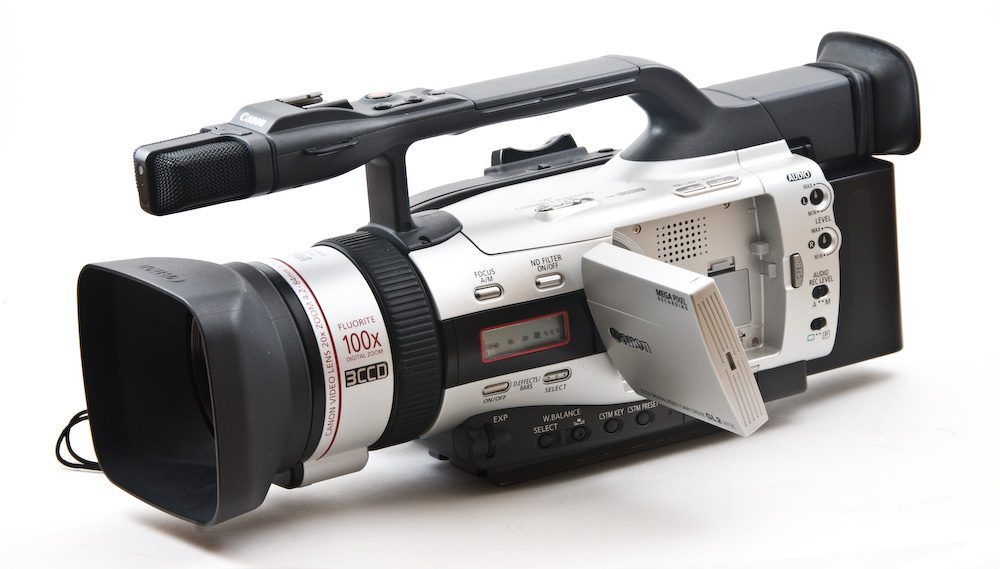
Every era of cinema has a camera that belongs not to the masters but to the students, and for the MiniDV years that camera was the Canon GL2. It sat exactly where Canon wanted it: below the XL1, the shoulder-mounted flagship with the interchangeable lens mount, and above the single-chip Handycams sold in department stores. Released in 2002 as the successor to the 1999 GL1, and sold in PAL markets as the XM2, it packed three quarter-inch CCDs, a 20x fluorite zoom and full manual control into a body that fit in a backpack. It was the camera you bought when serious but not yet paid.
Sony's DCR-VX1000 of 1995 had shown that a DV camcorder could deliver broadcast-grade pictures to anyone with a few thousand dollars, and in 1998 Thomas Vinterberg shot the first Dogme 95 film, The Celebration, on a humbler Sony consumer camera, the DCR-PC3. It took the Jury Prize at Cannes and taught a generation that the gap between a home movie and a feature was mostly nerve. The DV revolution was never about resolution. It was about permission.
The XL1 and the Birth of Pro-sumer
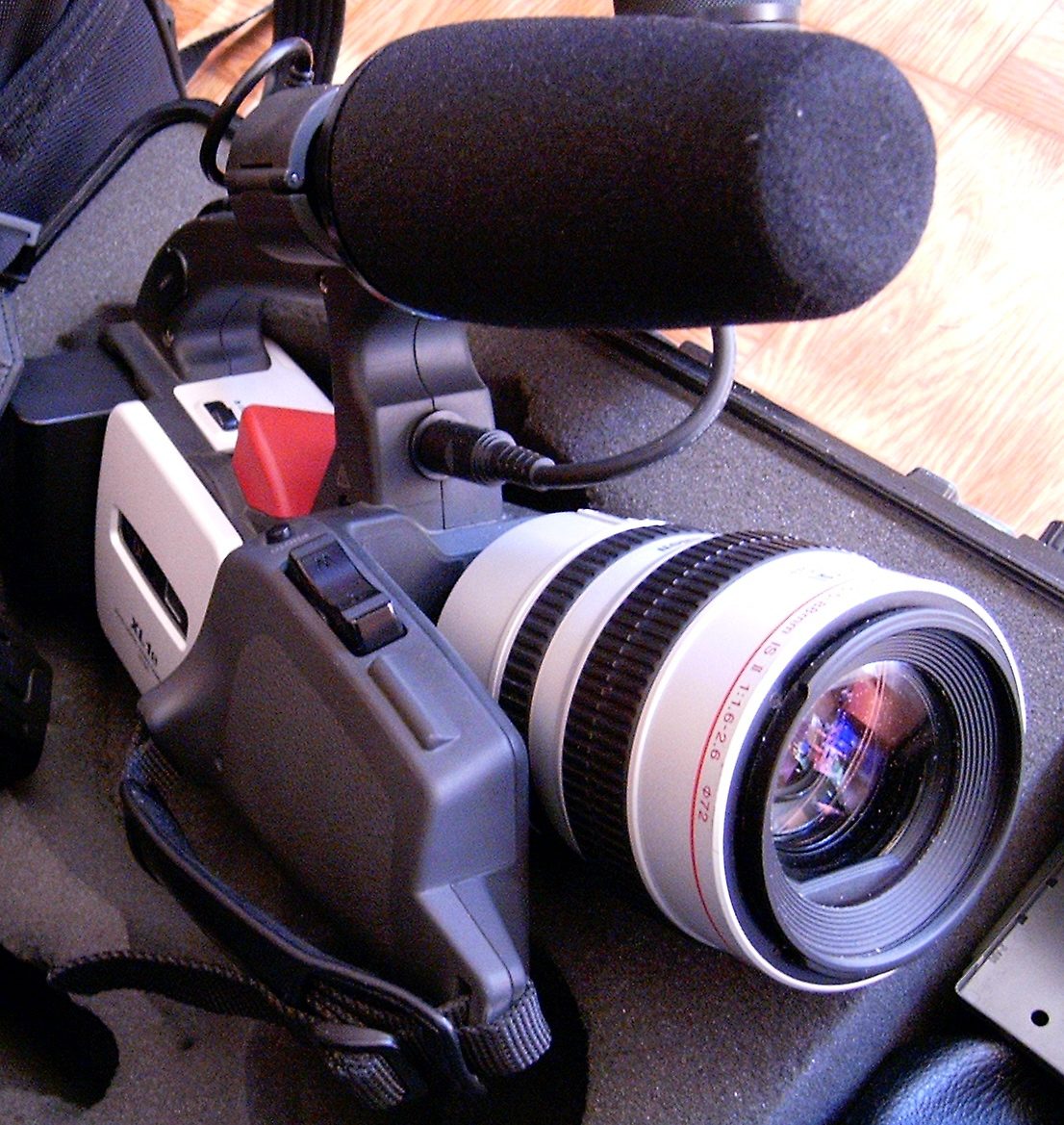
Canon's answer to the VX1000 was announced at the end of 1997 and shipped in early 1998. The XL1 was the first MiniDV camcorder with an interchangeable lens mount, and with an adapter it accepted Canon's EF still lenses. It invited the language of cinematography, focal lengths and depth of field, into a format Sony had positioned as very good home video. The word "pro-sumer" was already in circulation; the XL1 gave it a shape.
Its most famous credit came in 2002. For 28 Days Later, Danny Boyle and cinematographer Anthony Dod Mantle used a fleet of XL1s, as many as eight at once for the sequences of an emptied London, because the crew could stop traffic on Westminster Bridge only for minutes at a time. The smeared, harsh, low-resolution image felt like evidence rather than cinema, and it became one of the defining looks of the decade. Dod Mantle still owns one of the XL1s from the shoot.
The Fluorite Lens and the Hunger for a Film Look
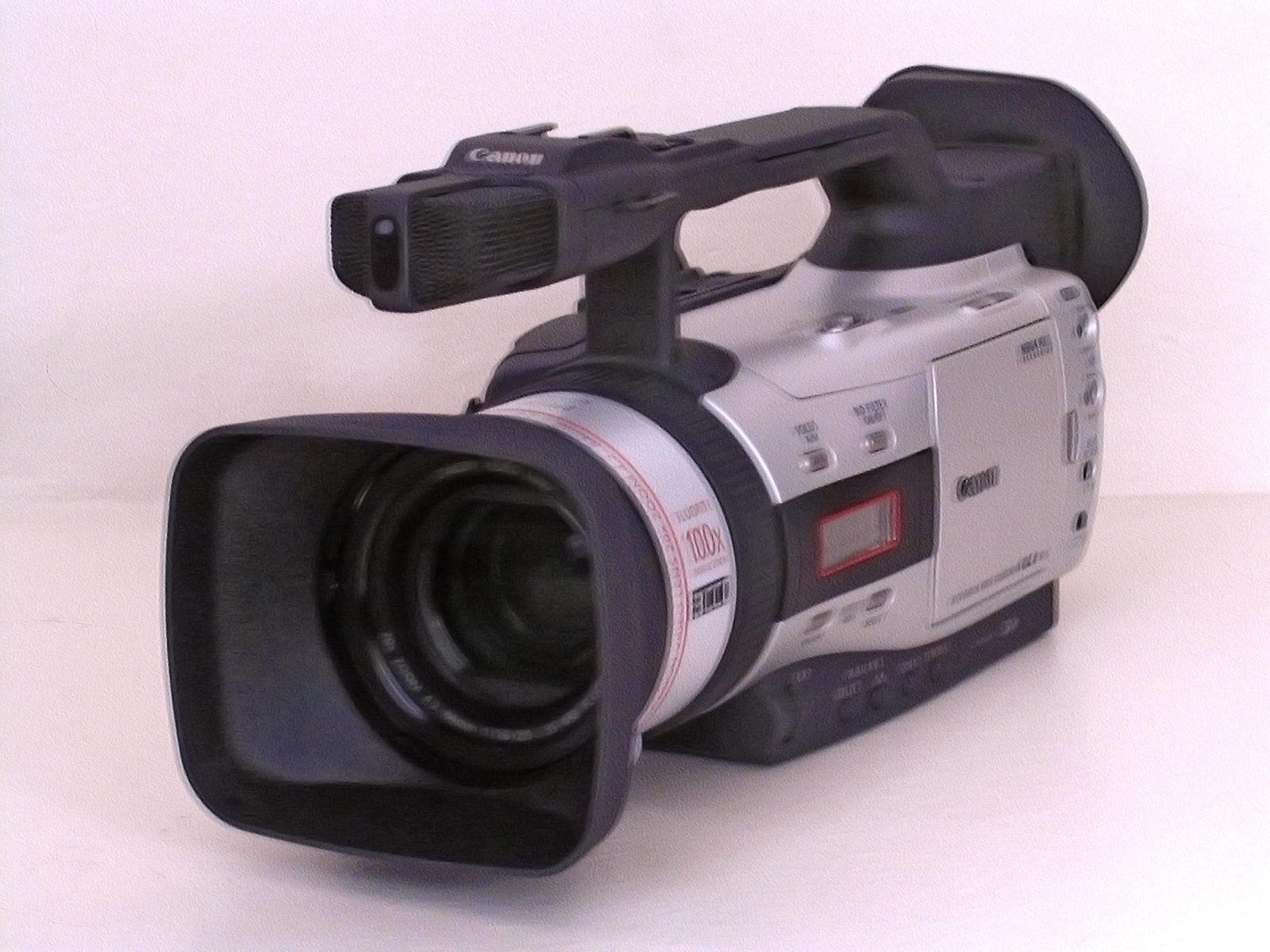
The GL1 arrived in 1999 as the XL1's compact sibling: the same three-CCD architecture, a fixed 20x zoom built with a fluorite element borrowed from Canon's L-series lens tradition, and a fraction of the bulk. The GL2 of 2002 refined the recipe with 410,000-pixel CCDs, better low-light performance, an improved viewfinder and XLR audio through an optional adapter, and it resolved around 530 lines, as good as standard-definition DV ever got.
The fluorite lens was the GL2's real signature. Fluorite suppresses chromatic aberration, the colour fringing cheap zooms produce at high-contrast edges, and Canon otherwise reserved it for expensive telephotos. On a camcorder costing a little under three thousand dollars it was an extravagance, and it showed: GL2 footage held its sharpness across the zoom in a way its rivals did not.
Then there was Frame Movie Mode. Standard DV recorded sixty interlaced fields a second, which is why so much early-2000s video looks like a news feed. Frame Mode captured a full frame thirty times a second, a pseudo-progressive image that traded some vertical resolution for the discrete-frame motion viewers associate with film. It was not 24p, and everyone knew it, but the whole era was defined by this hunger: filmmakers spent as much energy making DV not look like DV as they spent on lighting, and Frame Mode was one of the first tools that let them try.
Who Actually Shot With It
The XL1 got the famous credits. The GL2 got the volume. Film schools bought them by the cart-load because they were cheap enough to replace, tough enough to survive undergraduates and manual enough to teach exposure, white balance and focus. Public access stations stocked them for the same reasons, and wedding videographers ran them for years because they were unobtrusive in a church and the long lens reached from the back of a hall.
In skateboarding and BMX, the GL2 became the great alternative to the Sony VX1000, by then already a cult object. The Sony had the legend; the Canon had the sharper lens and a body still in production. Countless shop videos, local scene tapes and the first wave of clips uploaded to YouTube after 2005 were shot on GL2s, captured over FireWire into iMovie or Final Cut. Independent documentary was the other natural home: a GL2 with a wireless lavalier could follow a subject all day unnoticed, and the three-chip image survived the transfer to broadcast.
The Rivalry and the Arrival of 24p
Sony's DCR-VX2000 and its professional twin, the DSR-PD150, had appeared in 2000 and were the cameras working videographers already trusted, with a softer lens but superior low-light performance. The Canon countered with the fluorite zoom, Frame Mode and a price that undercut the PD150.
Then, in October 2002, Panasonic released the AG-DVX100, the first affordable MiniDV camcorder to record true 24p, the frame rate of motion-picture film, with a cinema-style gamma to match. Overnight the GL2's thirty-frame mode looked like a compromise next to a camera that simply shot the frame rate filmmakers wanted. The DVX100 became the camera of the indie feature and the Sundance short. The GL2 held onto everything else.
What kept it relevant was longevity. Canon never gave the GL line a 24p successor; it moved upmarket with the XL2 in 2004 and into HDV with the XH A1 in 2006, leaving the GL2 in the catalogue as its last standard-definition three-chip camcorder. Major dealers were still listing it new well into the HDV era, long after its rivals had been replaced, which made the GL2 the last great SD MiniDV camera: the final refinement of a format that had, for ten years, been the closest thing to a universal language for independent moving images.
The GL2 Today: Tapes, Heads and the DV Look
Twenty-odd years on, the retro revival that made the VX1000 a collector's item has spread to the whole DV generation, and music videos, skate parts and lo-fi shorts now seek out the DV look deliberately: the soft interlaced edges, the blown highlights, the 4:3 frame, the way the image smears under fast motion. Directors who grew up on early YouTube and 2000s skate videos shoot on tape because the texture cannot be convincingly faked with a plug-in.
On the used market a working GL2 typically sells for a few hundred dollars, with clean examples commanding a premium and tired film-school bodies going for much less. The tape transport is the weak point: heads wear, the loading mechanism jams, and a camera with thousands of hours on it may show horizontal lines in playback or refuse to eject a cassette, so have the seller record a clip and play it back. The GL2 is also known for leaky capacitors in its drive circuitry, which show up as erratic power, zoom or focus behaviour; some specialist shops can still recap the boards.
Getting footage out is the other hurdle. The GL2 delivers video only over FireWire, and modern laptops have no such port, so the usual route is a Thunderbolt-to-FireWire adapter or an older machine kept alive for capture; confirm the camera's port and cable are sound before paying for anything else.
None of that discourages the skaters and lo-fi filmmakers who want one. The GL2 offers a fluorite lens, full manual control and a three-chip image for the price of a filter on a cinema camera, and a look that belongs unmistakably to its moment. It never made history in a single famous film. It was the camera through which a decade of people learned what a film could be, and that is history of a different kind.