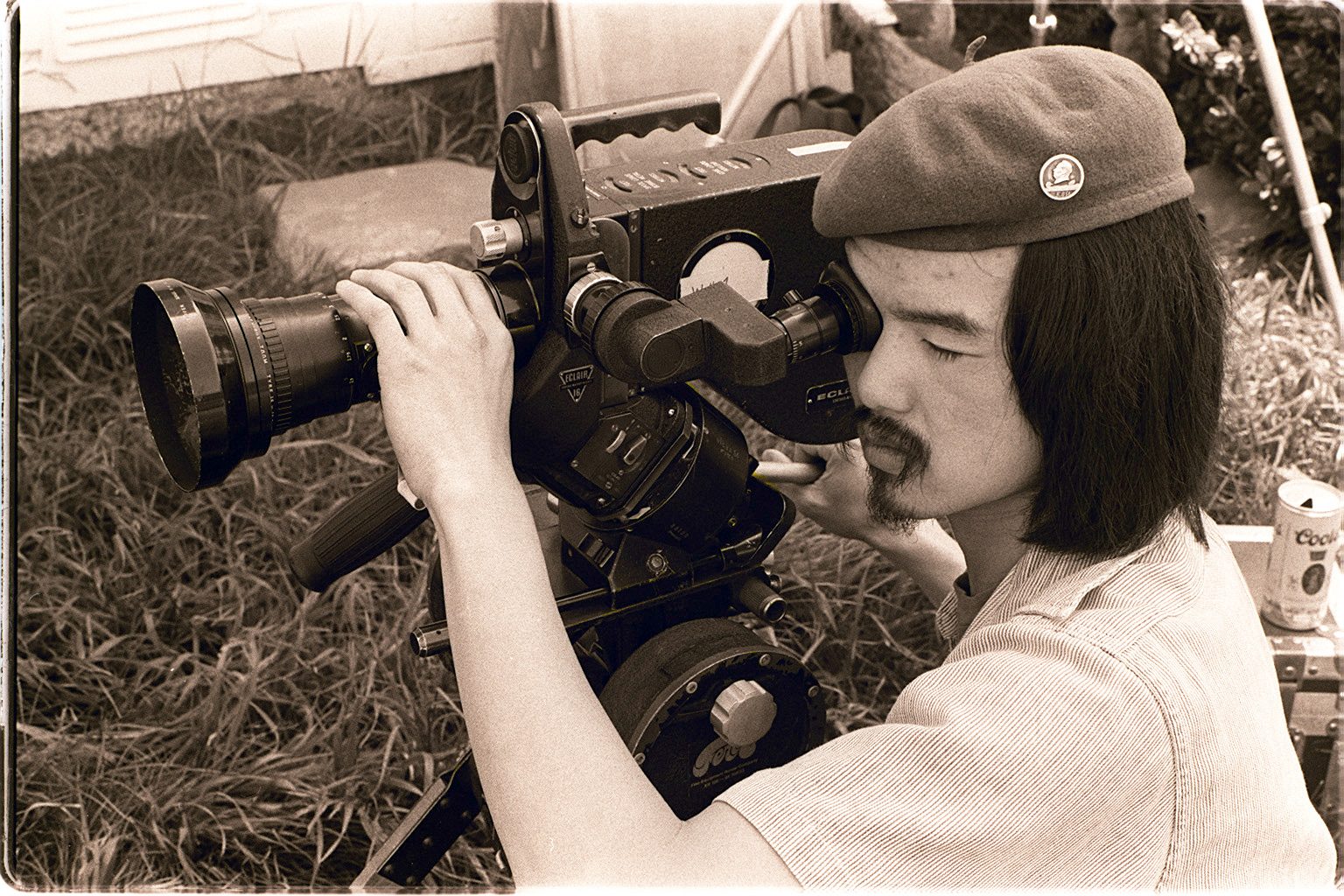
Where it came from
By the end of the 1950s, the people who wanted to make films out in the world had a problem. The cameras that could hold up on a real shoot were heavy, loud, or both. A 16mm camera that ran quietly enough to record sync sound in a room had to be wrapped in a padded blimp, and a camera that could be carried on a shoulder clattered so loudly that its sound was useless. The French firm Éclair, already known for the Cameflex, set out to build one machine that was both light and quiet.
The result, introduced in the early 1960s, was the NPR: Noiseless Portable Reflex. The name was a specification. It would be quiet enough to work without a blimp, light enough to carry, and a reflex, meaning the operator looked through the taking lens rather than a separate viewfinder. Those three requirements had rarely been met in one body before, and the way Éclair met them shaped nearly every 16mm camera that followed.
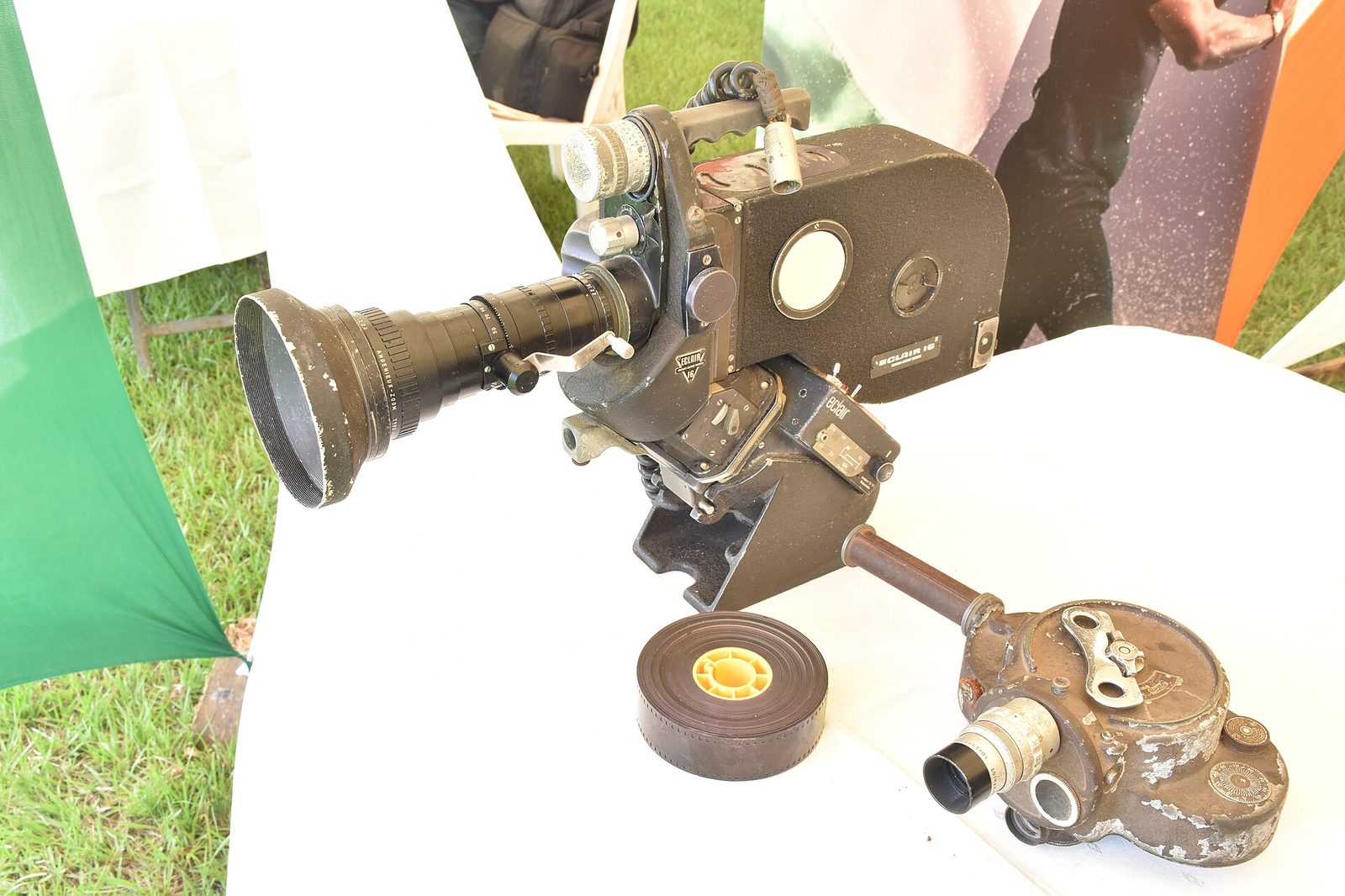
What made it different
The NPR's quietness came from its construction. The motor and the shutter sat on the same shaft, which removed a train of gears that other cameras needed between them. Fewer meshing parts meant less noise at the source, so the camera did not need a lens blimp to keep sound out of the microphone.
The second idea was the magazine. The pressure plate lived in the magazine rather than the camera body, and the magazines clipped on ready-threaded, so a reload meant swapping one for another rather than lacing film through a gate in a hurry. The Science Museum Group, which holds an NPR in its collection, notes that this instant-reload design has since become standard on modern film cameras. Éclair also moved the film spools to the back of the camera instead of stacking them on top, so the magazine rode on the operator's shoulder and balanced the lens at the front.
That arrangement is why the NPR looks the way it does, and why later documentary cameras look like it. The shoulder-mounted, rear-weighted 16mm camera is, in large part, an Éclair idea.
Who used it and what they shot
The NPR arrived just as filmmakers were looking for a way to shoot without a crew, a truck of lights, or a sound stage. The Science Museum describes it as playing a significant role in the French cinéma vérité movement, where a small team could follow people through ordinary rooms and record picture and sound together. Documentary directors in several countries took up the same approach, and the camera became a standard tool for BBC television production.
Its reach went well beyond news and documentary. Cinematographer Tony Pierce-Roberts shot the BBC's acclaimed series Tinker Tailor Soldier Spy on an NPR, which says something about the camera's image quality as much as its portability. In the United States, low-budget independent features also picked it up, and databases of camera credits attribute The Texas Chain Saw Massacre (1974) to an Éclair NPR, among other films that needed a sound-capable 16mm camera that could go anywhere. Treat any single credit from such lists with some caution, since camera attribution on small productions is often incomplete, but the pattern is consistent: when a crew needed to shoot on 16mm and move quickly, the NPR was a likely choice.
Its rivals and what replaced it
The NPR's most direct competitor was the Arriflex 16BL, introduced in 1965, which took the more conventional German route of building a blimped, self-contained quiet camera. The 16BL was familiar to studios and rental houses, and for many productions that familiarity won out. The NPR was the more inventive design, but the two cameras shared the market for years.
In 1971, Éclair replaced it with the ACL, designed by Agusti Coma and Jacques Lecoeur. The ACL kept the clip-on, pre-threaded coaxial magazines but was lighter and smaller, using a focal-plane shutter and an oscillating mirror to keep the body compact. It was cheaper to build, and it spread widely through television and independent film.
Éclair itself did not survive the transition to the video era. The company declined in the late 1970s and early 1980s, and its last cameras came too late to rescue it. In 1986 Aaton, the company founded by Jean-Pierre Beauviala, took over Éclair and stopped making cameras under the name. Aaton's own 16mm designs carried the same shoulder-balanced philosophy forward, which is a quiet kind of survival.
Why it still matters, and what one costs today
For a used-equipment buyer, the NPR is a camera to approach with care. It is a mechanical film camera from the 1960s, built to be serviced rather than thrown away, and a well-kept body can still run. Prices vary widely with condition, lens package, and how many magazines come with it, and sellers often list them with a zoom such as an Angénieux 12-120. Check that the motor runs smoothly through its speeds, that the magazines seat and lock firmly, that the mirror and viewfinder are clean, and that the camera is not noisier than it should be, since quiet running was the whole point.
It is also worth asking whether the motor and its power supply are present and working, because the original battery system is often the hardest part to replace. A camera that has been sitting for decades needs a technician to check it before anyone loads real film.
The NPR's influence is easier to see than to price. Every camera with a quick-change magazine, and every film camera balanced on the operator's shoulder, owes something to it. A modern digital cinema camera is built around the same idea: get out of the way of the person holding it.