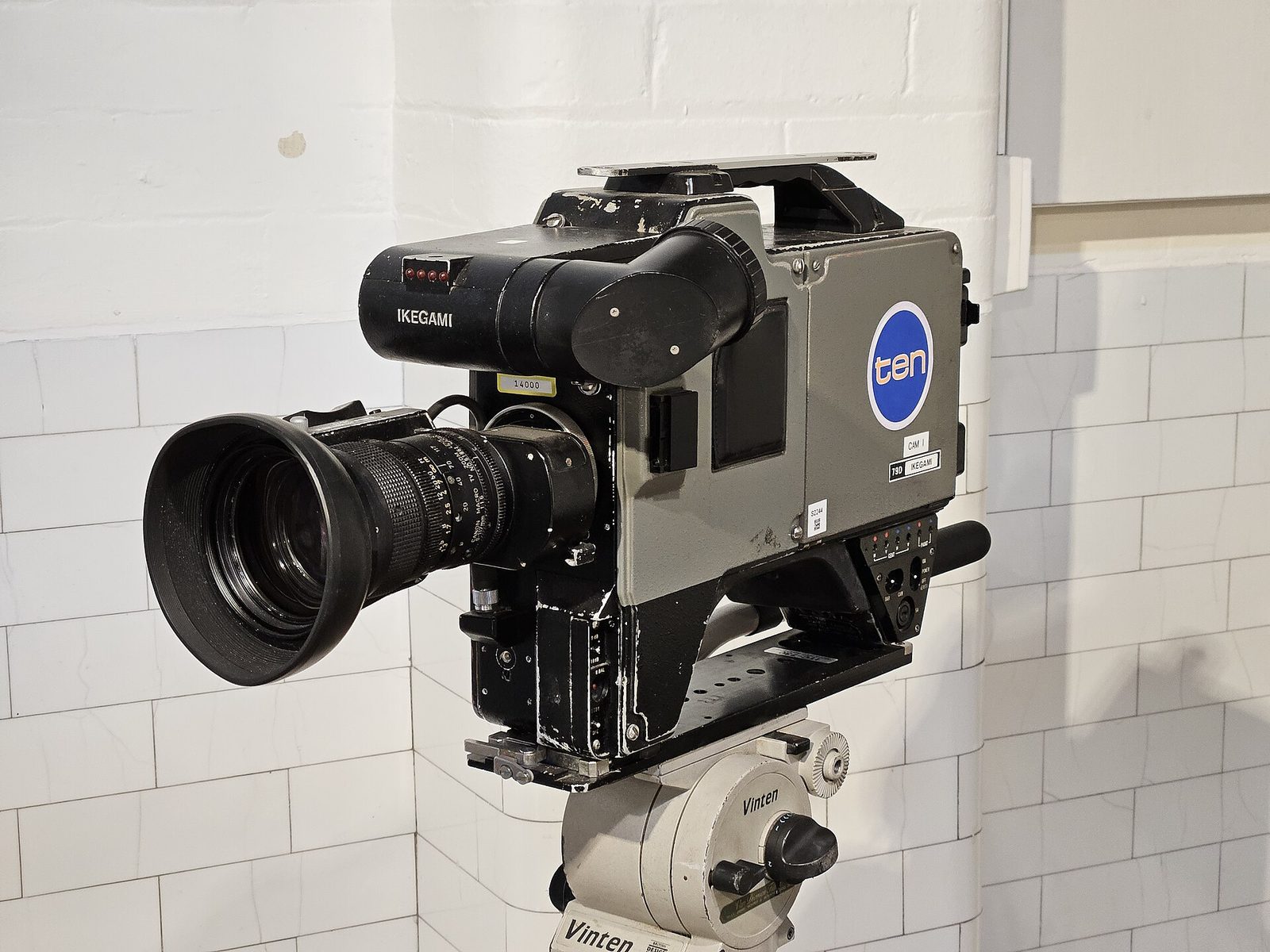
Where it came from
Ikegami Tsushinki began in Tokyo in 1946 as a maker of telephone coils and grew into one of the quiet giants of broadcast engineering. Its first portable camera, built around a 4½-inch image orthicon tube, was good enough that CBS used it in 1962 to cover the launch of NASA's Friendship 7. That was still a heavy, cabled tool. The change that matters for this story came a decade later, with the HL-33 of 1972, usually described as the first compact handheld colour camera for electronic news gathering. It still needed a separate backpack unit, but it proved that a television camera could leave the truck and walk.
The industry's problem in those years was film. Local news ran on 16mm: shoot it, race it to the lab, wait for the soup, cut it, and hope it made the six o'clock bulletin. Sony's 3/4-inch U-matic cassette recorders, arriving in the early 1970s, and portable cameras like Ikegami's, promised to collapse that chain into minutes. KMOX in St. Louis became the first station to drop film for electronic news gathering altogether in 1974, and the rest of the country followed over the next decade.
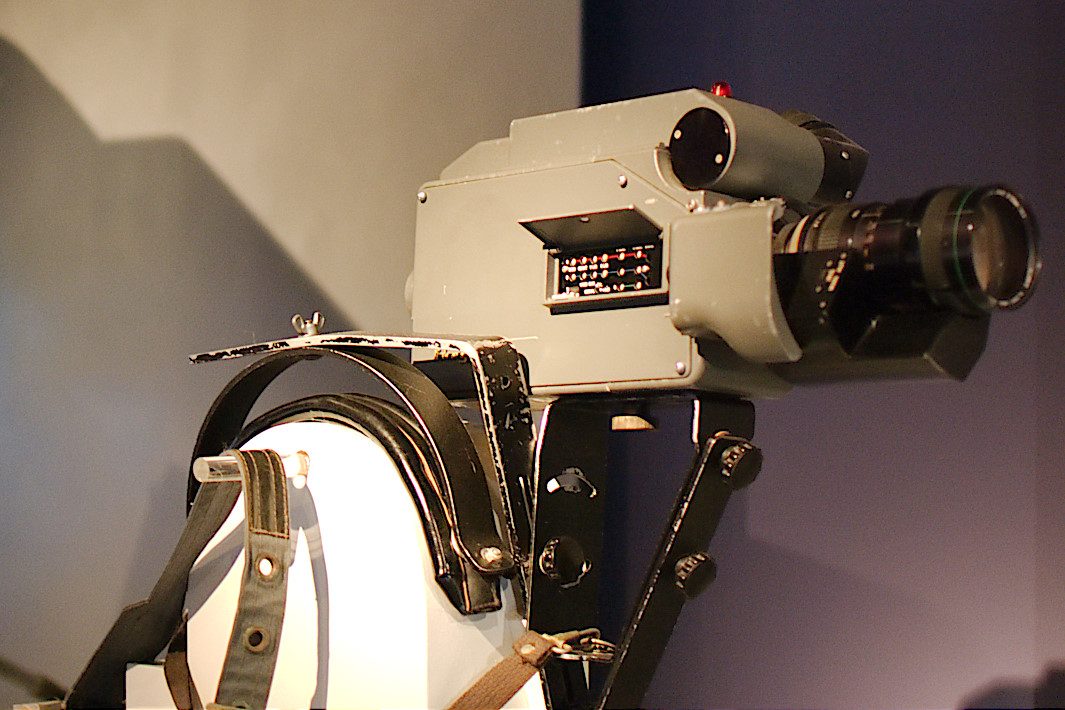
What made the HL-79 different
The HL-33 needed a tether to a backpack. In 1976 Ikegami introduced the HL-77, one of the first one-piece colour cameras, and in 1978 the HL-79A refined the idea into the machine that defined the category. Everything lived in the head: pickup tubes, prism block, electronics and a viewfinder, with a lens mount for the broadcast zoom of your choice. A shoulder pad and a cable to a separate recorder, and a single operator could work. The HL-79 and its descendants, the HL-79D and HL-79E of the 1980s, were rugged, serviceable and stable, which is why broadcasters bought them by the thousand. Ikegami later celebrated the sale of its 5,000th HL-79-series ENG and EFP camera.
It is worth being plain about what the camera was not. It was not a film camera, and it did not produce a film look. Its tube pickups gave the soft, slightly smeared, comet-trailing image that anyone who watched news in the 1980s will recognise. What it offered was immediacy, live transmission over a microwave link, and a picture you could judge on the monitor the moment you shot it. That feedback loop is the idea that later video-assist, the digital monitor and the DIT cart all inherit.
Who used it and what they shot
The core audience was television: local stations, networks and the outside-broadcast trucks that covered sport. Ikegami cameras had a long history at the Olympics, from Mexico in the 1960s and Sapporo in the 1970s, and ABC used Ikegami cameras, including six HL-95 Unicams, at the 1984 Los Angeles Games. The HL-series look defined the visual texture of a generation of sitcoms, soap operas, current affairs and documentary work, particularly in the UK, where the cameras were popular for roving outside-broadcast and magazine-programme work.
Ikegami also made a serious run at the cinema. Its EC-35 Electronic Cinematography camera, aimed at replacing film for dramatic production, earned the company an Emmy in the 1980s. It did not displace film, but it sits in the same line of thought as the digital cinema cameras that finally did, and it shows that the engineers who built news cameras were already thinking about the movie screen.
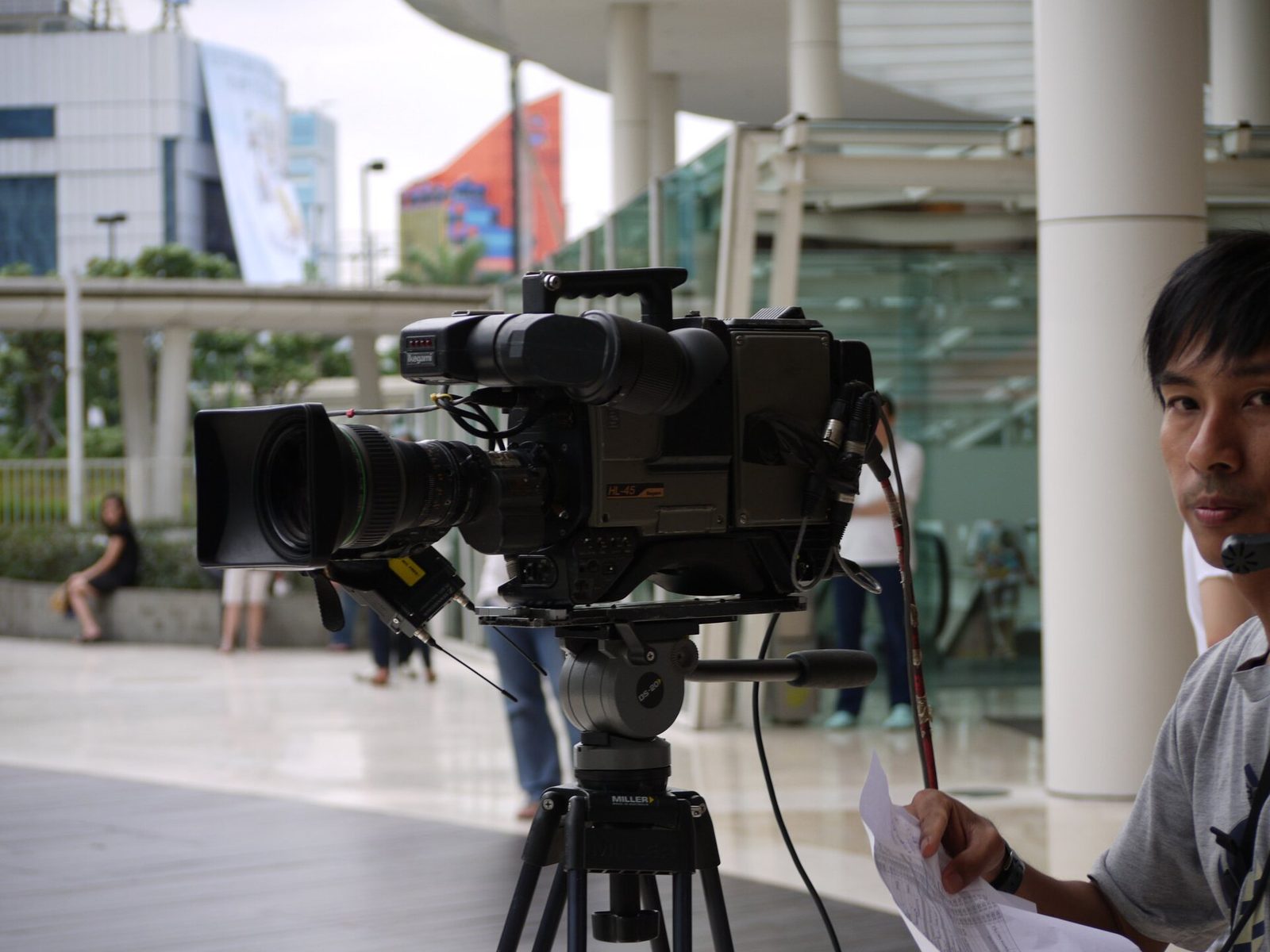
Rivals and what replaced it
The HL-79's chief competitors were RCA's TK-76 and Sony's BVP-300, all one-piece tube cameras of the mid-to-late 1970s. Then the ground shifted twice. In the early 1980s the camera and recorder were joined into a single camcorder, most famously with Sony's Betacam of 1982, and Ikegami, which does not make tape transports, became a licensee of Sony's Betacam SP and DVCAM and Panasonic's DVCPRO rather than a rival to them. In the late 1980s solid-state CCD sensors became practical for broadcast, and the glass tube and its lag disappeared. The one-piece shoulder camera became a camcorder, and the recorder-in-the-body model took over for good.
Ikegami carried on, with the HL-V55, HL-99 and later HDTV and tapeless designs, including a short-lived 1995 collaboration with Avid on the Editcam tapeless format. But the HL-79 stands as the high-water mark of the tube era, the camera that finished off 16mm news film.
Why it still matters, and what one is today
An HL-79 is a museum piece more than a working tool. The tube cameras that survive in places like the Wireless Hill Museum in Western Australia, where the example photographed here sits, are usually decommissioned station cameras. They need a matching base station or camera control unit, proprietary cabling and tubes that are no longer made, so a complete, working system is rare and the market is mostly collectors, television historians and prop houses dressing sets for period drama. If you are shopping, check the condition of the viewfinder and the lens mount, ask whether the CCU and cable come with it, and treat anything described as "tested" with some care, since the pickup tubes are the part that cannot be replaced.
What survives in working form is the lineage. The portable one-person camera, the live monitor, and the idea that the picture should be seen as it is shot all came through the ENG revolution that the HL-79 helped to win. Most of today's cameras, from the smallest camcorder to the biggest digital cinema body, are descendants of the argument that Ikegami made in 1978: take the studio camera, shrink it onto a shoulder, and go.