Where it came from
The Mitchell Camera Corporation was founded in Los Angeles in 1919 by Henry Boeger and George A. Mitchell, building on a design by inventor John E. Leonard. Their first camera, the Mitchell Standard, reached the market in the early 1920s and quickly earned a reputation for one thing above all else: steadiness. Mitchell's intermittent movement, with its dual registration pins that locked each frame in place during exposure, produced an image that simply did not weave or breathe on screen. In an era when audiences were still being convinced that cinema was a serious medium, that stability mattered enormously.
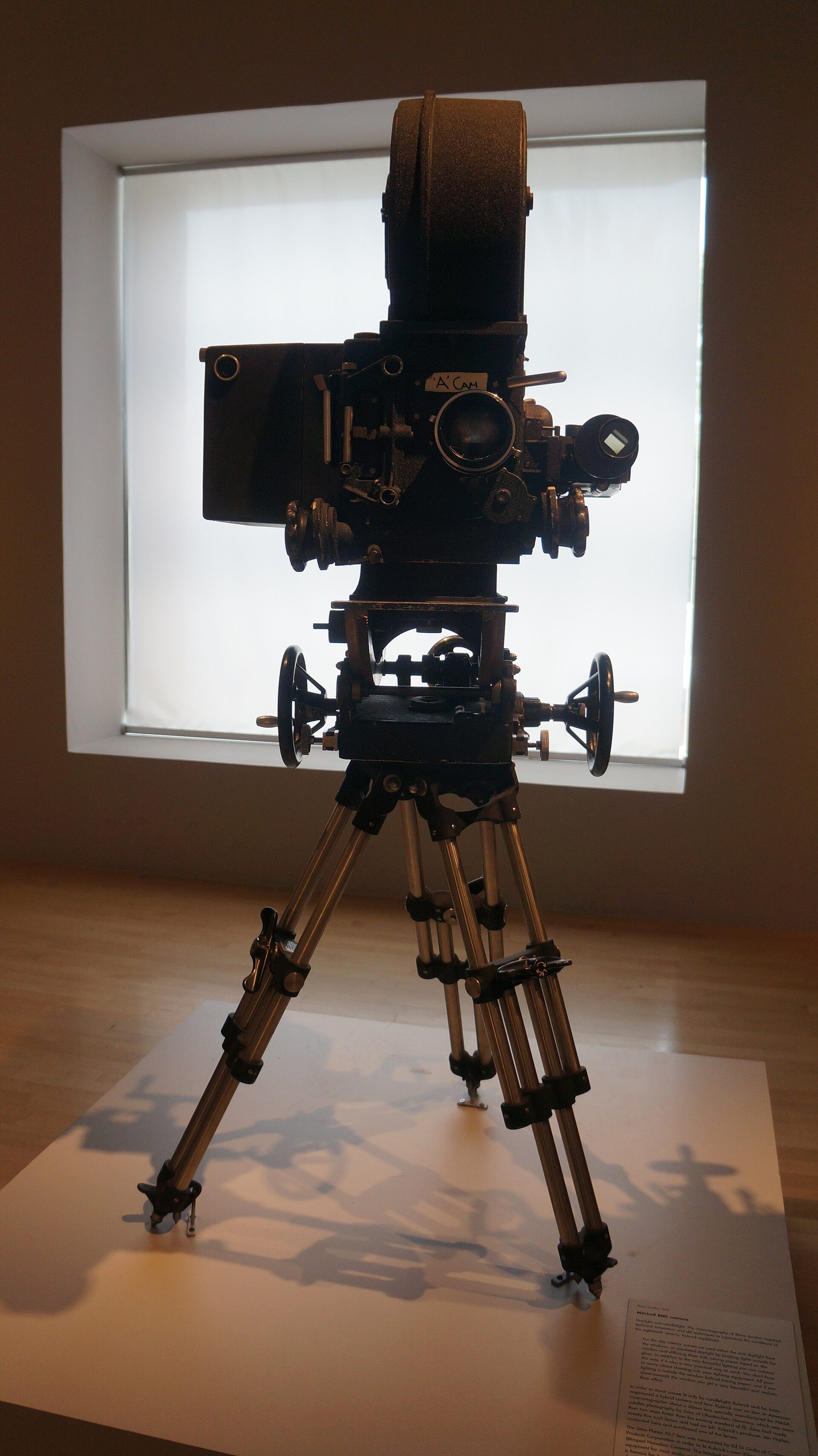
The Standard had one problem. When synchronized sound arrived in the late 1920s, its mechanism was far too loud to run near a microphone. Studios wrapped their cameras in padded booths and later in bulky external housings called blimps, sacrificing mobility for silence. Mitchell's answer came in stages: first the NC (Newsreel Camera) in 1932, and then in 1934 the BNC, the Blimped Newsreel Camera. The BNC built the sound insulation into the camera body itself. It was still heavy, but it was a single self-contained unit that could be mounted, moved, and shot with a microphone a few feet away.
The rack-over and the ground glass
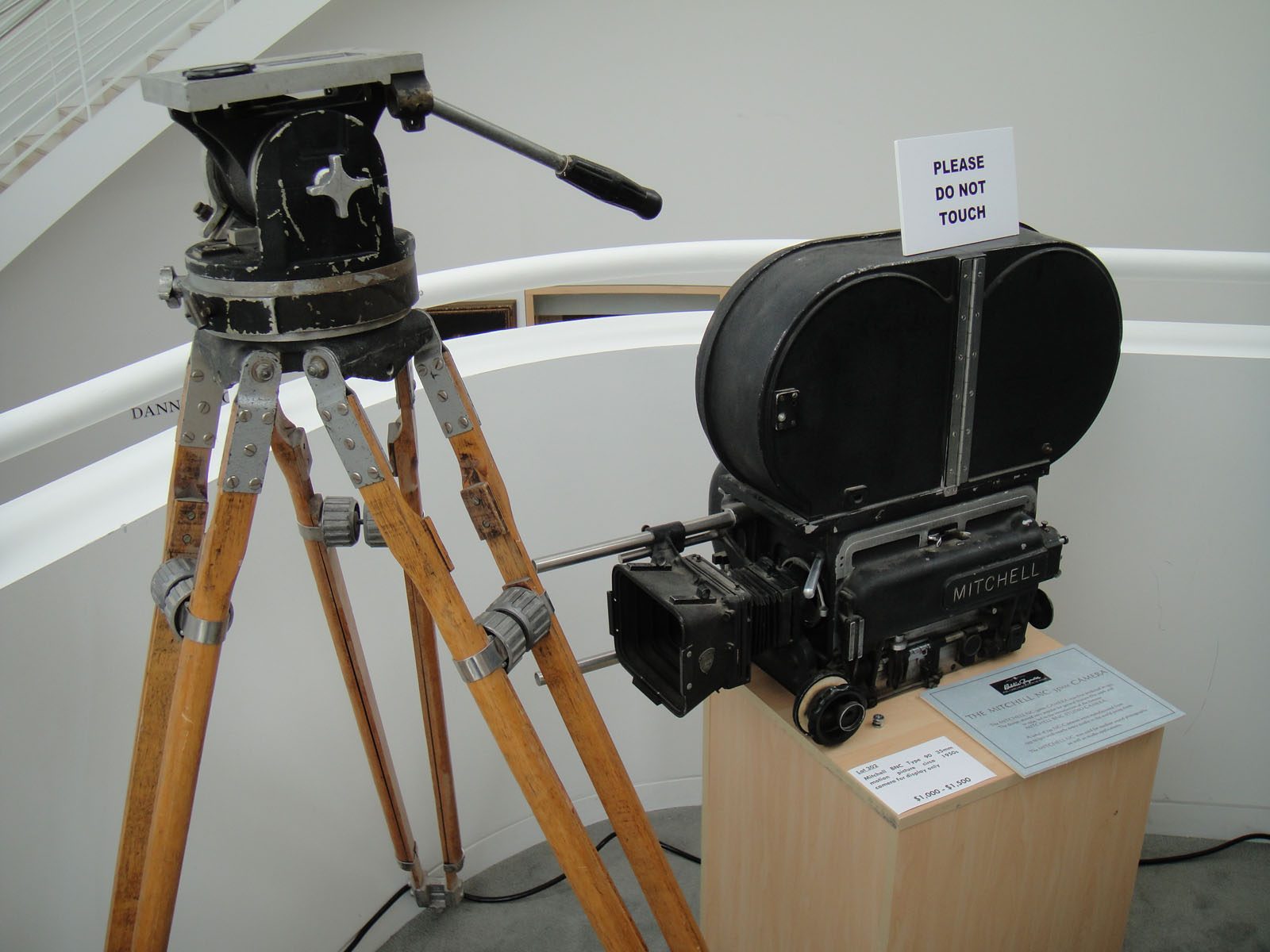
The BNC is the reason this site is called what it is. Reflex viewing through a spinning mirror shutter did not exist in Hollywood studio cameras yet, so Mitchell solved the problem of seeing exactly what the lens saw with a piece of brute-force elegance called the rack-over. The entire camera body sat on a base with a lateral slide. To line up a shot, the operator cranked the body sideways so that a ground glass focusing screen sat directly behind the taking lens, composed and focused on that glass, then cracked the body back into shooting position. During the take, the operator watched a separate side-mounted viewfinder with a parallax correction.
It sounds cumbersome, and it was. But it meant that every composition on a Mitchell was judged on a real ground glass, through the real lens, before film ever ran. Focus pullers, camera operators, and cinematographers built entire working methods around it, and the discipline of setting a frame precisely and then committing to it is arguably a legacy of that workflow.
Citizen Kane and the studio era
The first BNC ever sold went to Samuel Goldwyn's studio, where it landed in the hands of a young cinematographer named Gregg Toland. Toland shot Wuthering Heights (1939) on it and then took it to RKO for Citizen Kane (1941). The deep-focus photography that made Kane famous, with faces sharp in the foreground and a ceiling sharp forty feet behind them, depended on stopped-down lenses, powerful arc lighting, and a camera whose registration was steady enough that the extreme depth of field did not reveal any frame-to-frame jitter. Toland later used the same camera on The Best Years of Our Lives (1946).
By the 1940s the BNC was the default at nearly every major studio. Warner Bros., MGM, Paramount, and Fox ran fleets of them. Technicolor's famous three-strip cameras, which exposed three separate negatives through a beam-splitting prism, were built by Mitchell around the same movement. When the widescreen wars of the 1950s arrived, Mitchell built the 65mm cameras for Todd-AO, and later variants formed the basis for Panavision's large-format work. If you have watched almost any American studio film from Casablanca to Ben-Hur, you have watched footage that went through a Mitchell gate.
The reflex problem and the end of an era
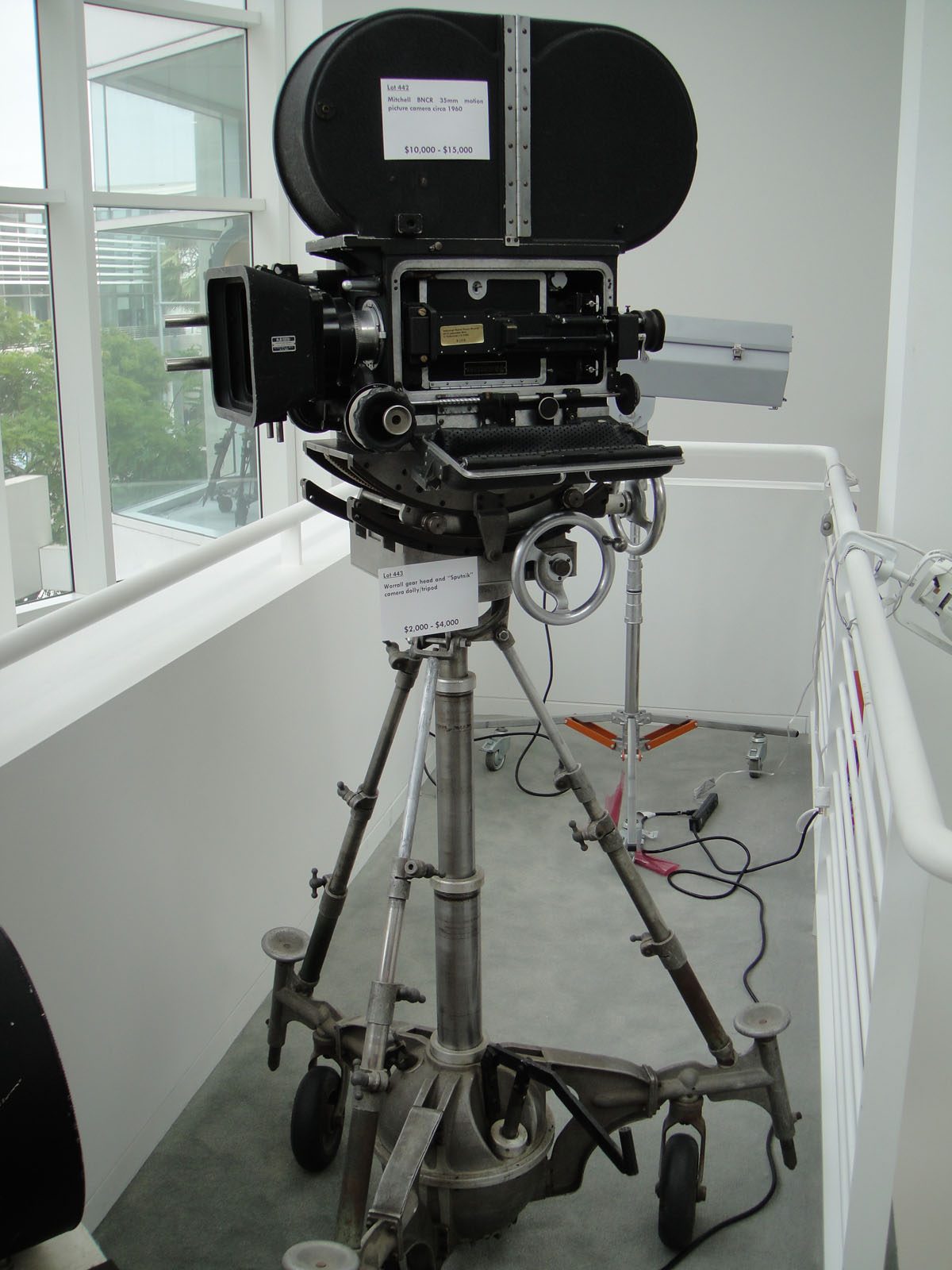
The BNC's weakness was always the viewfinder. The Arriflex 35, introduced in Germany in 1937, had a mirror shutter that let the operator see through the lens continuously while filming. It took decades for Hollywood to fully adopt reflex viewing, partly because the Arriflex was loud and partly because the studios had enormous investments in Mitchell equipment and Mitchell-trained crews.
Panavision's Robert Gottschalk saw the opening. Through the 1960s, Panavision bought up BNC bodies and converted them into reflex cameras, the PSR (Panavision Silent Reflex), leasing them back to studios with Panavision lenses attached. Mitchell itself released the reflex BNCR in 1967, but the momentum had shifted. In 1972 Panavision introduced the Panaflex, a purpose-built, lightweight, silent reflex camera that Steven Spielberg used on The Sugarland Express. The BNC's thirty-year reign was over within a few seasons. Mitchell Camera Corporation faded through the 1970s and eventually closed.
Why it still matters
The Mitchell movement never really went away. Its registration design was so good that effects houses kept BNCs and high-speed Mitchells in service long after production had moved on, because optical compositing and motion-control work demanded pin-registered steadiness above all else. Mitchell mechanisms, and cameras built around them, appear in the credits of effects-driven films well into the 1980s.
On the used market today, a Mitchell BNC is a collector's object more than a working tool. Complete bodies with the rack-over base, matte box, and original Mitchell lenses turn up occasionally through vintage cinema dealers and estate sales, often for a few thousand dollars, and a surprising number still run. The modern descendants of its workflow, with a crew setting a frame on a monitor and then committing to the take, are on every set in the world. And the ground glass that the BNC's operators cranked over to look through is still the thing every cinematographer is really trying to see.