The lens man who wanted a camera
Panavision did not begin as a camera company. Robert Gottschalk ran a camera shop in Westwood Village in the early 1950s, where he and colleague Richard Moore had discovered anamorphic optics while experimenting with underwater photography. When CinemaScope set off the widescreen boom, Gottschalk saw the opening. He founded Panavision in 1954 to build anamorphic projection lenses, and the first product, the Super Panatar, took the market. Within a decade Panavision's Auto Panatar taking lenses had fixed the distortions of CinemaScope close-ups, and even 20th Century Fox had given up its own system for Gottschalk's glass.
The cameras came later. After building the 65mm Camera 65 system for MGM's Raintree County and Ben-Hur, Gottschalk turned to 35mm, buying up Mitchell NC and BNC bodies, keeping the superb Mitchell movement, and rebuilding everything around it into the Panavision Silent Reflex, the PSR, introduced in 1967. It was smaller, lighter, and quieter than a Mitchell BNCR, it had reflex viewing, and it became one of the most popular studio cameras in the world. But it was still a converted Mitchell. It still had to sit on a head.
A camera built from scratch
The Panaflex was the first camera Panavision designed from a blank sheet. Engineer Albert Mayer led the project, and it took four years. The brief was simple to state and brutal to execute: a 35mm reflex camera quiet enough to record dialogue without a blimp, light enough for an operator's shoulder, and rugged enough to be the A camera on a studio picture. The Arriflex 35 IIC could go handheld but roared; the Mitchell BNC was silent but immovable. The Panaflex, unveiled in 1972, did both. It converted from studio mode to a handholdable unit in minutes, carried a digital tachometer and motorized magazine take-up, and ran quietly enough that the recordist could stand beside it.
Gottschalk received an Academy Award of Merit in 1978 for the Panaflex, his second Oscar after a 1960 award for Camera 65. He died in 1982 at 64, by which time the camera had already changed how American movies were made.
Texas, 1973
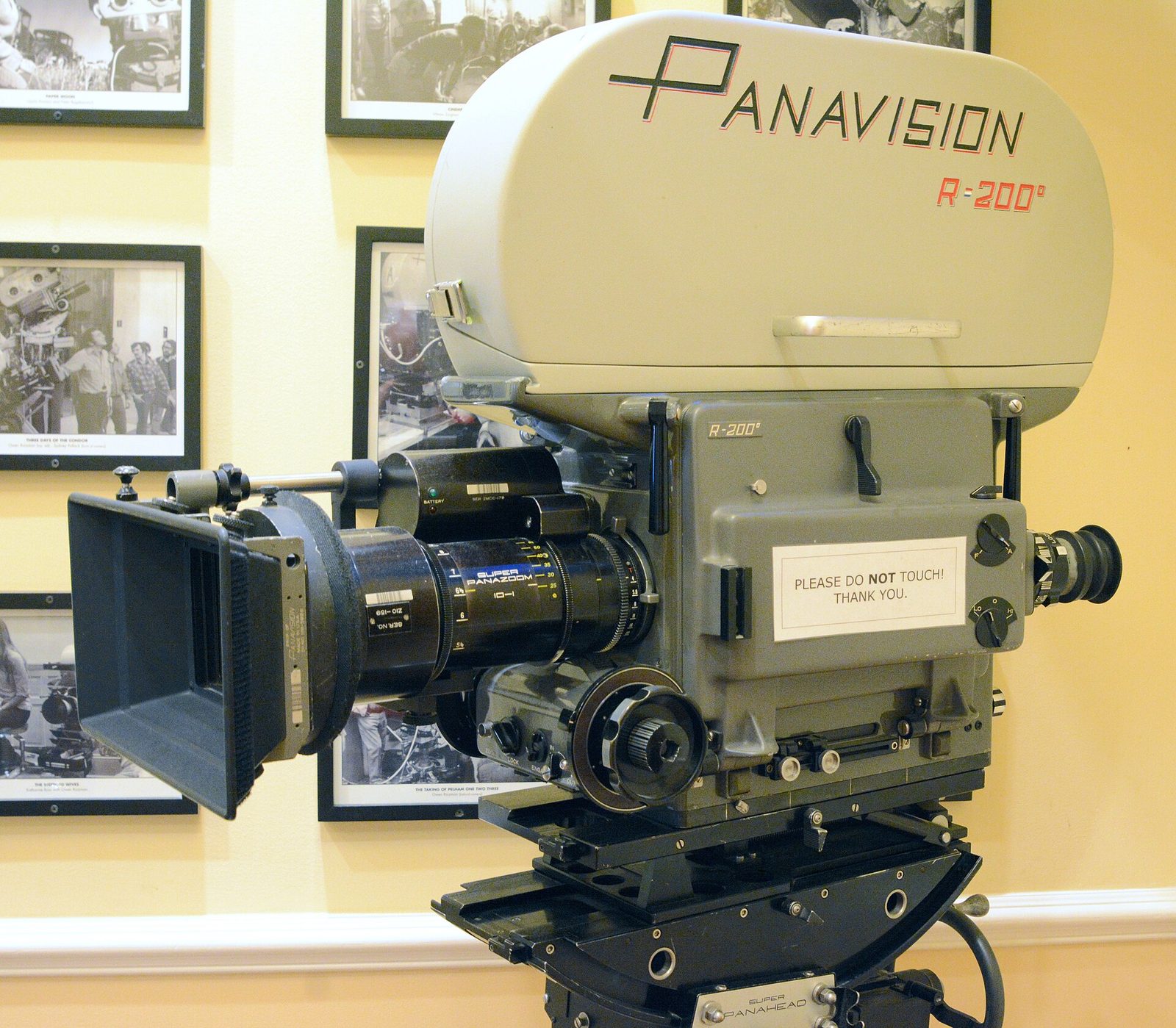
By Gottschalk's own count, more than 130 productions requested the first production Panaflex. He sent it to Texas, where Richard Zanuck and David Brown were producing The Sugarland Express for Universal, directed by a 25-year-old Steven Spielberg and photographed by Vilmos Zsigmond. The film shot from December 1972 into March 1973, and the crew, working with a Panavision R-200 in the meantime, held the interior car scenes until the new camera arrived so they could record sync sound inside the vehicle.
What they did with it went straight into the language of movies. Zsigmond put the Panaflex in the back seat of police car 2311 with Goldie Hawn, William Atherton, and Michael Sacks and executed 360-degree pans inside a moving car, with other vehicles traveling in the frame, while the actors played dialogue. American Cinematographer sent Herb Lightman to the location, and Zanuck told him he had never seen shots like those in dailies, calling the camera "super-efficient, super-quiet, super-small and super-light." Ted Post's Magnum Force also shot on a Panaflex that spring and reached theaters first, but Sugarland was the picture that proved the camera.
Spielberg took the lesson to sea. On Jaws in 1975, Bill Butler put the Panaflex on his shoulder aboard the Orca and used his knees to absorb the roll of the boat instead of relying on a 400-pound gimbal; the great majority of the boat material was shot handheld. Jaws was a studio picture whose defining sequences would have been impractical with a studio camera.
Gold, Platinum, Millennium
Panavision kept refining. The Panaflex X arrived in 1974, the Panaflex Lightweight for floating rigs in 1975, the Panaflex Gold in 1976, and the high-speed Panastar in 1977. Close Encounters of the Third Kind was shot on Gold bodies; Star Wars used the older PSR R-200 alongside Panaflex bodies with C-Series anamorphics. Not every landmark of the decade was a Panaflex film, though. Apocalypse Now was largely an Arriflex 35BL and Mitchell BNCR picture, and Arri's 35BL, launched the same year as the Panaflex, remained its real rival for the rest of the film era.
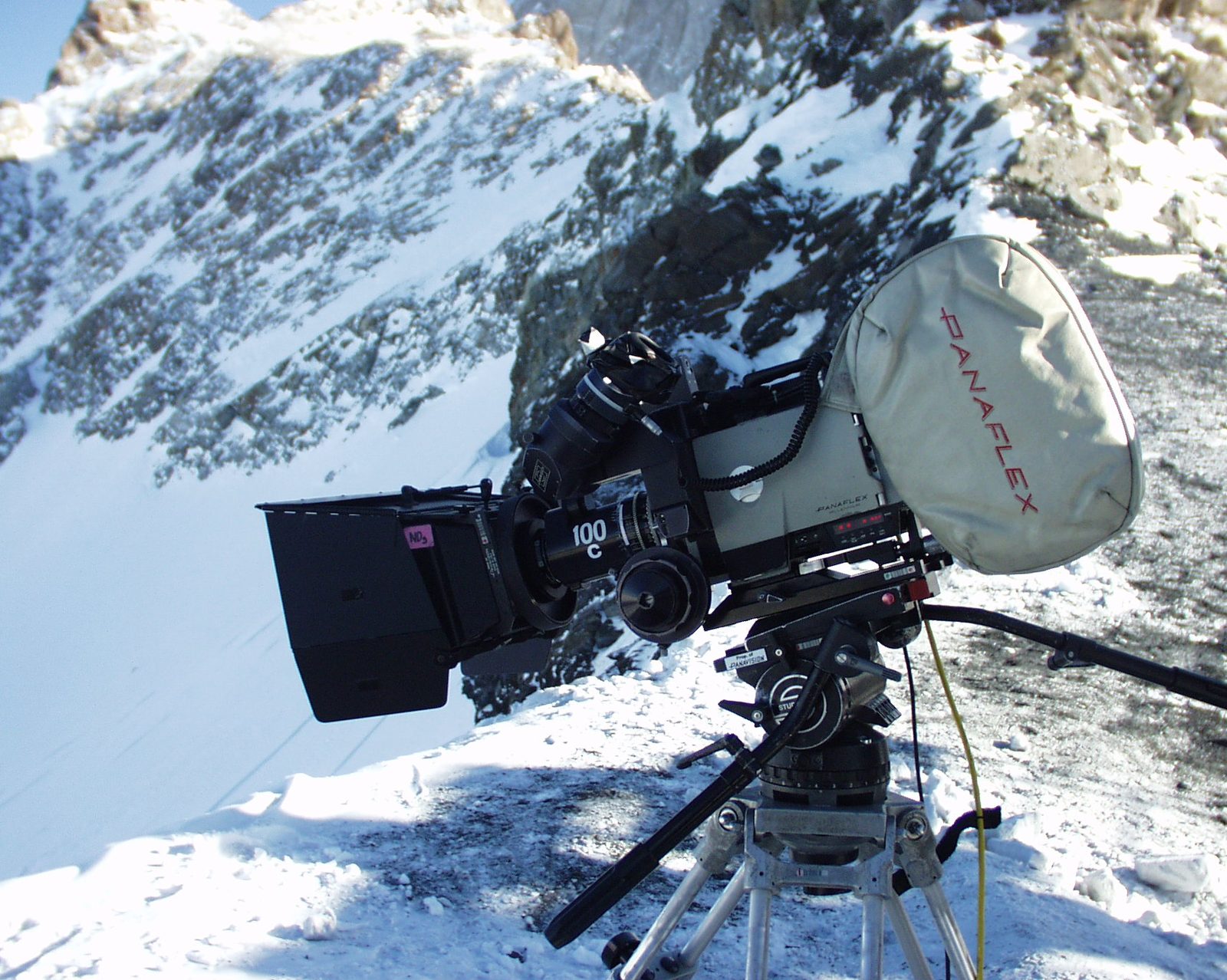
After Gottschalk's death, Warner Communications sold the company, and the new owners shipped the Platinum in 1986. It was an evolution of the 1972 movement rather than a new machine, with crystal speeds forward and reverse and a shutter adjustable while running. It became the default Hollywood camera from the late 1980s until the Millennium, and it stayed in service long after: Wally Pfister's 35mm package on The Dark Knight in 2008 included a Platinum alongside two Millennium XLs.
The Millennium of 1997 was the first genuinely new Panaflex, with revised electronics, integrated lens motor control, and a body that dropped from about 24 pounds to 17. The Millennium XL of 1999 shrank it further, suiting studio, handheld, and Steadicam work in one package, and made the first real change to the film transport since 1972: twin sprocket drums, the layout Moviecam had pioneered and Arri would adopt for the Arricam in 2000. The XL2 of 2004 was the last major revision. Panavision was already preparing the digital Genesis, and the XL2 stands as the film Panaflex's last hurrah.
Never for sale
The Panaflex succeeded on engineering, but it endured on a business decision. From the beginning Panavision built cameras only to rent them. The company owns its entire inventory, and no Panaflex has ever been legitimately sold to a customer. That meant every camera came back to Woodland Hills for service, every improvement could be retrofitted across the fleet, and a package could be tailored to a production. It also meant the Panaflex was never an object a filmmaker could own, which made it a different kind of institution from the Arriflex. Directors bought Arris. They booked Panavision.
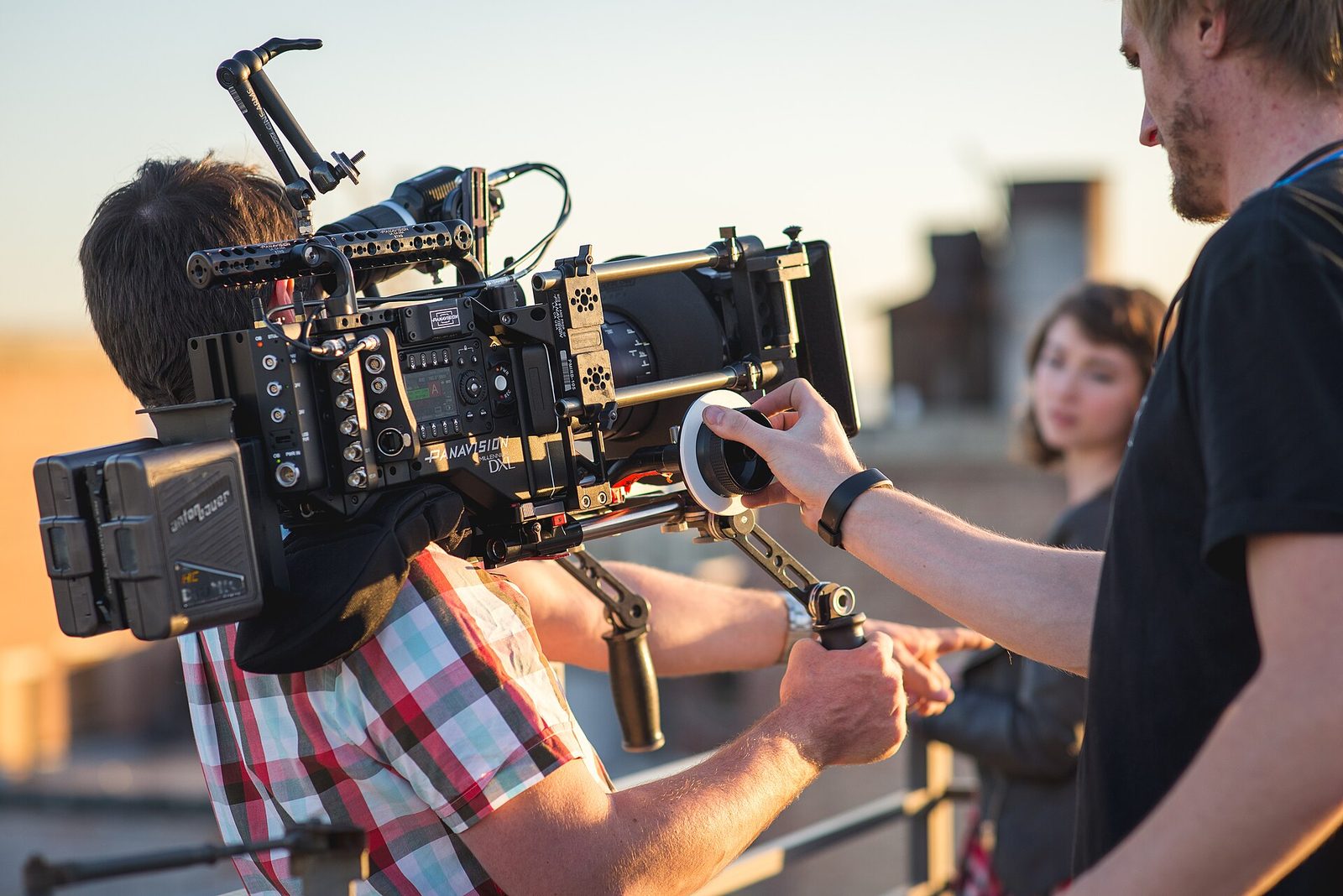
The model still holds. Panavision continues to rent film cameras, and the XL2 remains the choice of the directors who insist on celluloid. Robert Richardson shot Once Upon a Time in Hollywood on Millennium XL2s because he considered it the best balanced 35mm camera available. Paul Thomas Anderson and Michael Bauman shot Licorice Pizza on a pair of XL2s that had previously served on The Force Awakens, engraved "Millennium Falcon" and "Death Star." Christopher Nolan's 35mm work with Pfister leaned on Millennium XLs and Platinums with Panavision anamorphics.
What you can actually buy
For a collector or a working shooter, this leads to a hard truth. A Panaflex is not something you find on the used market. When one surfaces at auction it is usually a decommissioned body sold as memorabilia. If a listing offers a "Panaflex Gold, ready to shoot," treat it with suspicion; at minimum it will lack the PV-mount lenses and factory support that made the system what it was.
The good news is that the Panaflex's rivals were sold outright, and they remain in circulation. An Arriflex 35BL, the camera that fought the Panaflex through the 1970s and 1980s, is the closest thing to owning that era, and it takes standard PL glass. An Arri 435 gives you a superb MOS body for high-speed and effects work, a 535 gives you a sync-sound studio camera with a modern viewfinder, and a Moviecam Compact or SL delivers much of the twin-drum quietness that the Millennium XL borrowed. Any of these can be found through dealers and auction houses for a fraction of what a season of Panavision rental would cost. And if the project truly calls for a Panaflex, the answer today is the same as it was for Spielberg and Zsigmond on a Texas highway in 1973: you call Panavision, and you rent one.