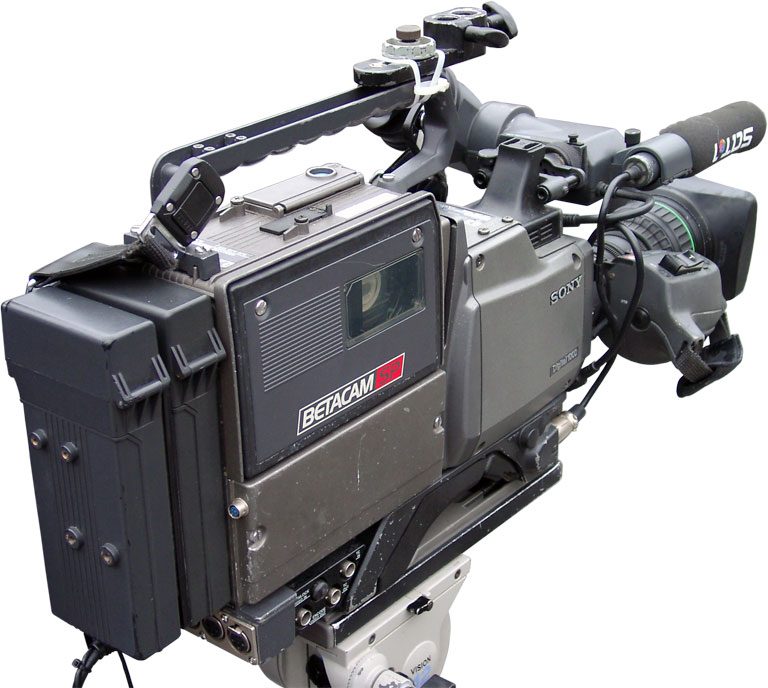
A note on what this chapter covers. Unlike the Mitchell or the Arriflex, Betacam is a format rather than a single camera: a cassette, a recording standard, and an ecosystem of camcorders, dockable heads, and studio decks from Sony, Ikegami, and others that all spoke the same language. This series treats formats the same way it treats cameras, because a format like Betacam, MiniDV, or 65mm shaped what got shot, by whom, and how it looked, just as much as any individual machine.
Before the camcorder: film cans and umbilical cords
For most of television's first three decades, news was shot on 16mm film. A crew would expose reversal stock, race it back to the station, run it through a processor, and cut it on a flatbed while the newscast clock ticked. It worked, but it was slow. The answer was electronic news gathering, or ENG: a portable color camera feeding a separate portable videotape recorder, usually a Sony U-matic three-quarter-inch deck slung over the shoulder of a second crew member.
The cameras of that era were remarkable machines for their day. RCA's TK-76 and Sony's BVP-300 helped establish the shoulder-mounted form factor, and Ikegami's HL-79, introduced in 1978, became the workhorse of American newsrooms. It was a three-tube Plumbicon camera weighing around 25 pounds, self-powered and rugged enough to survive years on the street. But every one of them was tethered. A multi-pin cable joined camera and U-matic recorder, and a two-person crew became the standard cost of doing television news.
1982: Sony cuts the cord
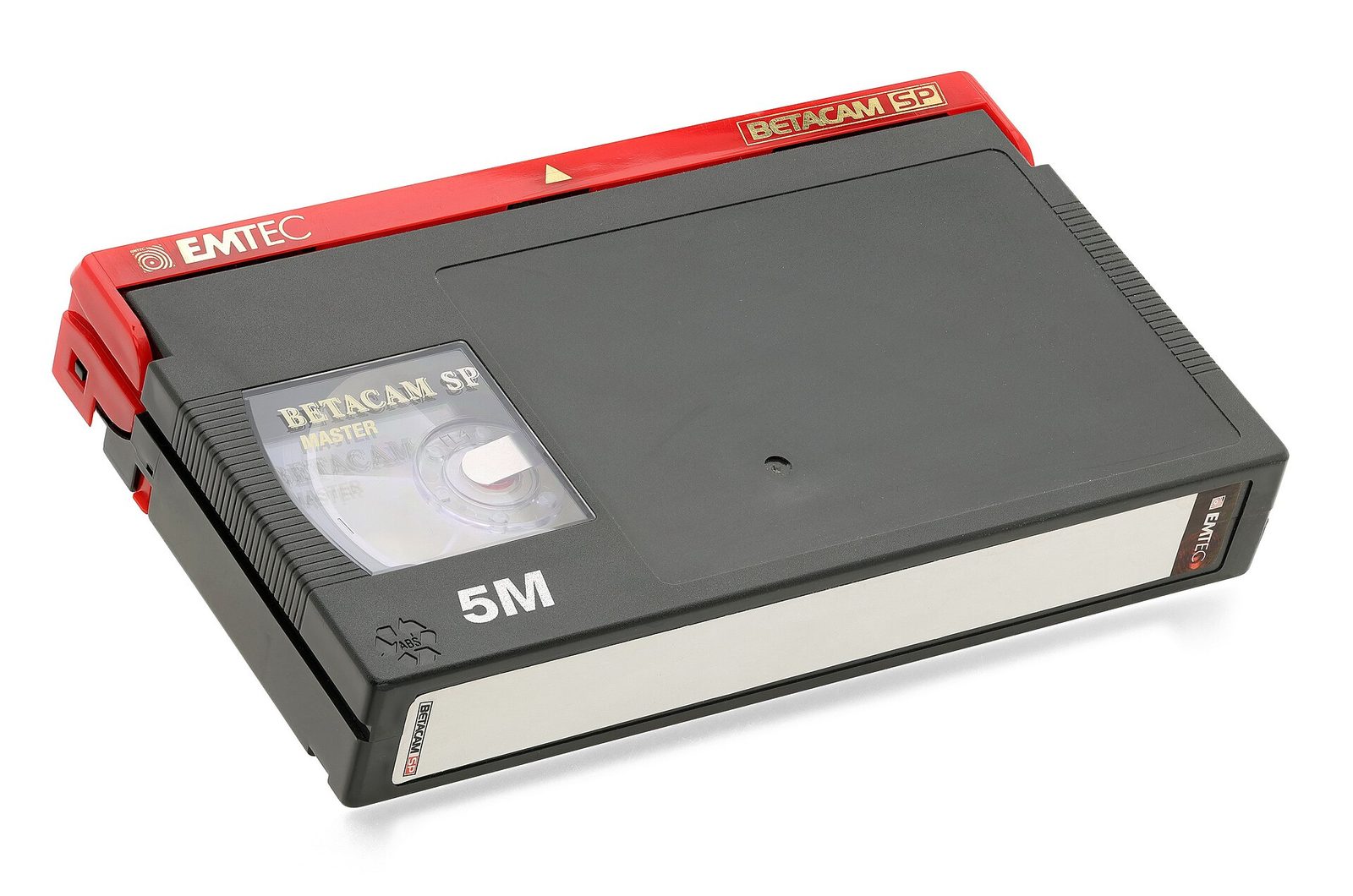
Sony introduced Betacam in 1982, and the idea was deceptively simple. Take the half-inch cassette shell of the consumer Betamax format, run the tape past the heads at more than five times the Betamax speed, and record the video as components, with luminance and the two color-difference signals laid down on separate tracks rather than folded together into a single composite signal. The result was a picture that comfortably outclassed U-matic on a cassette small enough to bolt a recorder directly onto the back of a camera.
That bolt-on recorder was the BVV-1, and when it docked to Sony's BVP-3 camera head with its three Saticon tubes, the combination was sold as the BVW-1, the first practical one-piece broadcast camcorder. By 1983 the fully integrated BVW-3 camcorder was in the hands of news crews. The significance was not the picture alone. It was that one person could now carry the camera, the recorder, and the battery as a single unit and come back with broadcast-quality component tape. The economic logic behind the two-person crew was gone.
Betacam SP and the golden age of the shoulder camera
The original oxide-tape Betacam had limits: recording time was short and the format was still, by later standards, a little soft. Sony answered in 1986 with Betacam SP, for Superior Performance. It moved to metal-particle tape, raised luminance resolution to roughly 340 lines, added FM audio channels to the existing longitudinal tracks, and introduced a large cassette that ran 90 minutes in studio decks. SP decks still played older Betacam tapes, so stations could upgrade without abandoning their archives.
The camcorders that followed defined the look and feel of professional video for a generation. Sony's BVW-200, introduced in 1990, was the company's first true one-piece Betacam SP camcorder rather than a dockable pair. The BVW-300 and BVW-400 series brought CCD sensors in place of tubes, ending registration drift, lag, and burn-in. The BVW-D600 of the mid-1990s paired FIT Hyper HAD CCDs with digital signal processing in the camera head while still laying the picture down on analog SP tape, a bridge between two eras. Alongside these came the studio and edit decks, the BVW-75 and later the more affordable UVW-1800, that turned Betacam SP into a complete ecosystem from acquisition to broadcast.
Ikegami, dockable heads, and an open ecosystem
Sony did not keep the format to itself. Betacam was licensed, and Ikegami, whose HL-79 had defined the previous generation, built its own Betacam-format camcorders and dockable camera heads through the 1980s and 1990s. The HL-95 could be found docked to Betacam SP back-ends including Ampex's CVR-5, and the Ikegami HL-V55 was the company's first fully integrated one-piece Betacam SP camcorder. A station could choose an Ikegami head and a Sony recorder, or the reverse, and the tapes would play in any deck in the building.
This interoperability is a large part of why Betacam won. Panasonic's competing MII format, introduced in 1986, was technically respectable, but Betacam had already been in newsrooms for four years and had an installed base of decks, tapes, and trained operators. By the end of the decade, Betacam SP was the de facto standard for broadcast news in most of the world, and the phrase "shot on Beta" simply meant professional.
Two decades of everything: news, docs, corporate, and MTV
Once a format is in every newsroom, it spreads. Documentary crews who had shot 16mm through the 1970s moved to Betacam SP for its low cost per minute and the ability to review footage on the spot. Corporate and industrial video, a huge and largely invisible industry through the 1980s and 1990s, ran almost entirely on SP. The music video business, born with MTV in 1981, embraced Betacam both as an acquisition format and as the delivery master that every network and post house could play. The distinctive quality of that footage, with its clean component color, its slight softness against film, and the hard clip on highlights, is what most people now recognize as the look of late twentieth-century television.
In 1993 Sony introduced Digital Betacam, which kept the cassette shell and the dockable philosophy but recorded a mildly compressed 10-bit component digital signal. The DVW-700 camcorder became the standard-definition workhorse for drama, commercials, and documentary work through the rest of the decade. It also drew the attention of filmmakers curious about what electronic acquisition could do. Windhorse, shot in Tibet and Nepal in 1996 on a DVW-700WS, is often cited as the first feature to be photographed and posted entirely digitally, and the camera's film-gamma options were an early attempt to give video the tonal response of negative stock. They were a rehearsal for the digital cinematography that followed.
Replacement, and what the used market is really worth
The end came in stages. Sony's own Betacam SX in 1996 offered a cheaper digital path for news; DVCAM brought quarter-inch DV tape to professional use; HDCAM in 1997 carried the Betacam cassette into high definition; and XDCAM in 2003 moved acquisition to optical disc and then to solid-state cards. By the late 2000s the tape path that had defined the industry for a quarter-century was gone from most newsrooms.
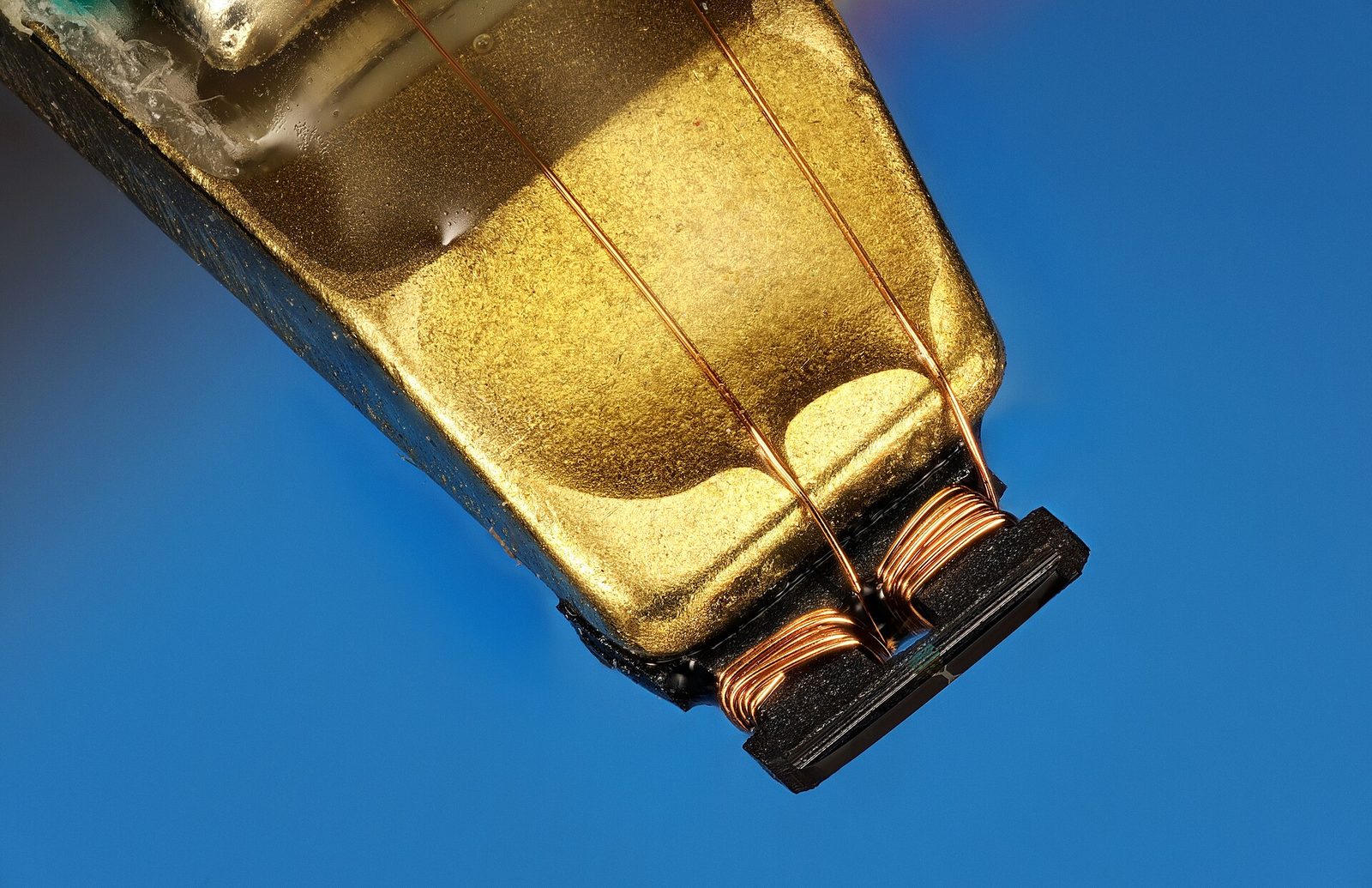
That migration is where the value now sits. Betacam SP camcorders themselves are cheap on the used market because there is no practical acquisition workflow left for them. Working decks are another matter. A serviced BVW-75, UVW-1800, or Digital Betacam player is what libraries, broadcasters, and production companies need to transfer decades of masters, and good ones command real money. If you are buying either, ask for the hours meter reading on the drum and the overall machine, insist on a demonstration playing a known tape to check tracking and the head-to-tape interface, check for capstan and pinch-roller wear, and budget for a service visit. Spare heads are increasingly scarce, and a deck with low drum hours is worth far more than one with a fresh coat of paint.
There is also a smaller, more romantic market. Music video directors and independent filmmakers have rediscovered the Betacam look, renting rebuilt tube and early CCD camcorders from specialist houses to get the color and highlight behavior that no plugin quite reproduces. The Betacam was never glamorous, but it changed who could make television and how quickly they could make it, and the pictures it produced are the visual memory of an entire era.