Where it came from
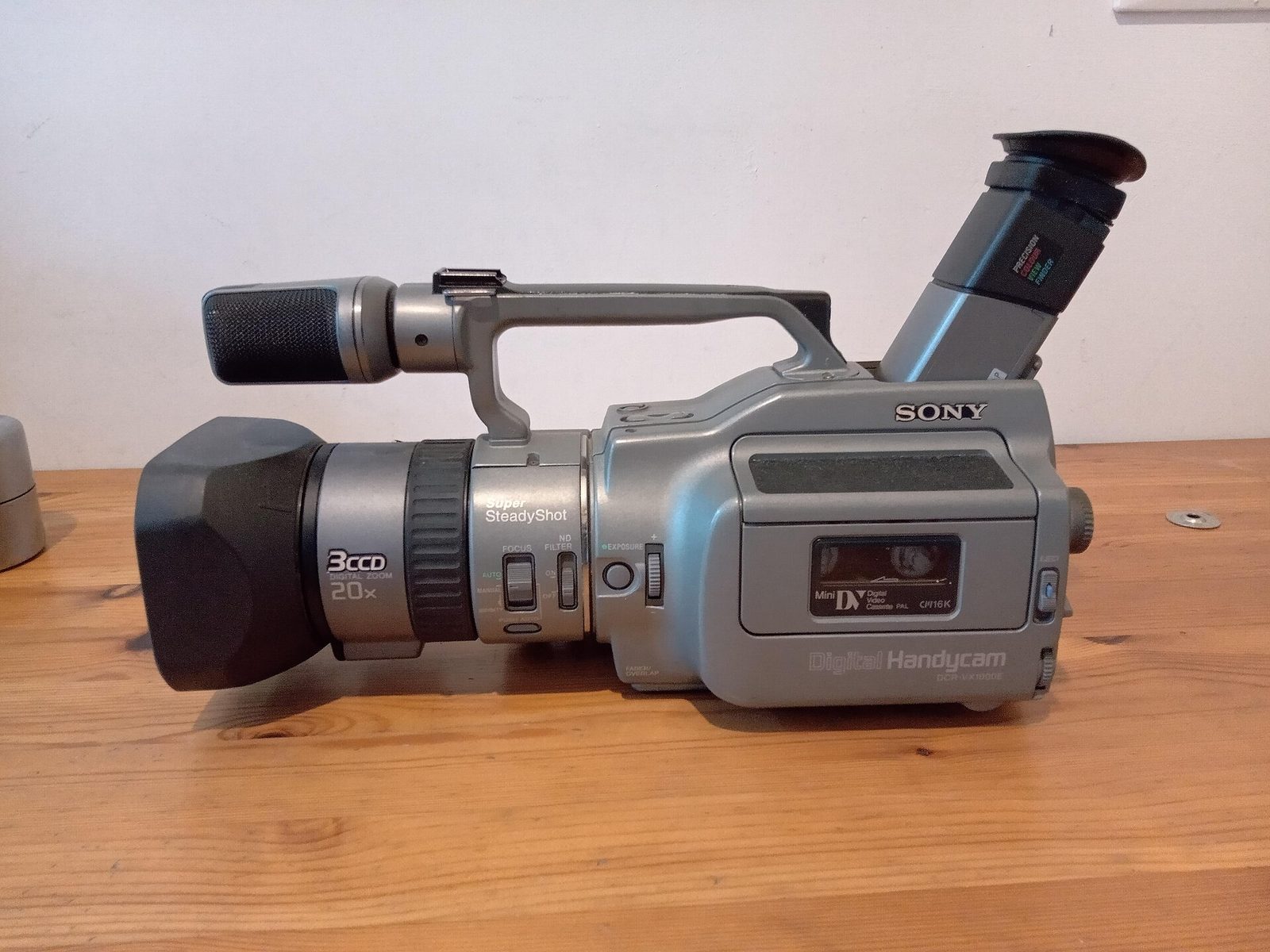
In 1995 a professional Betacam package cost roughly ten times what Sony asked for a small silver camcorder with a stubby handle and a flip-out viewfinder. The DCR-VX1000, introduced that year at a list price of about $3,000, was among the first camcorders to record to the new MiniDV cassette, and it was widely reported as the first consumer model with a FireWire (IEEE 1394, Sony's i.Link) port that could move video into a Mac or PC as data rather than as a degraded analog signal. It descended from Sony's Hi8 VX1 and VX3 line, and it shared its three-chip block and lens with larger shoulder-mount machines such as the VX9000 and DSR-200, which took full-size DV cassettes.
The timing mattered as much as the hardware. Desktop editing was just becoming possible on consumer computers, and for the first time a filmmaker could shoot, ingest and cut a project without a deck, a tape-to-tape suite or a rental house. The VX1000 did not invent the digital video revolution, but it was the machine most people could actually afford to join it with.
What made it different
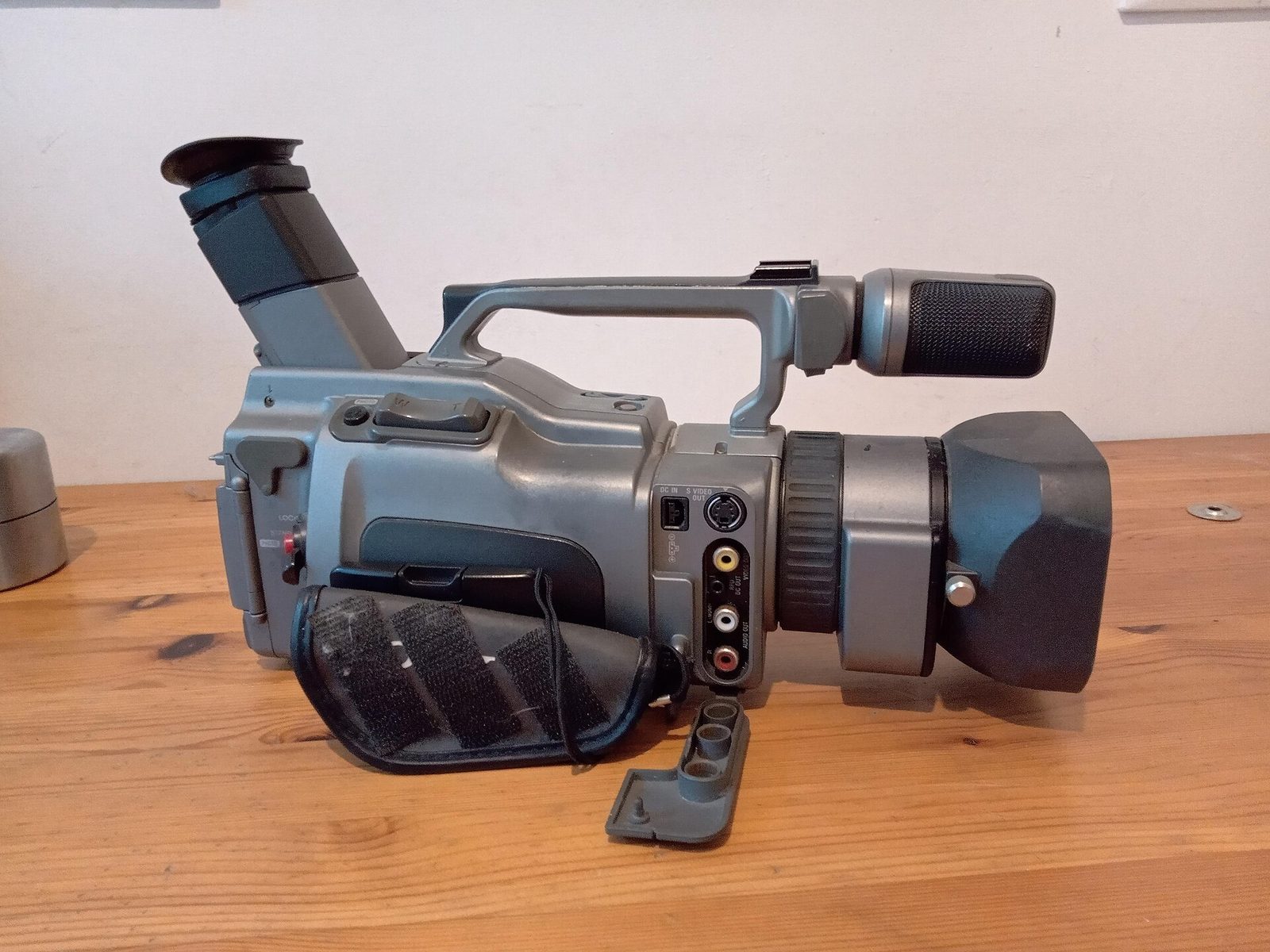
Three separate 1/3-inch CCDs, one each for red, green and blue, sat behind a Carl Zeiss Vario-Sonnar zoom with a 10x optical range. Sony quoted roughly 410,000 pixels per chip and better than 530 lines of horizontal resolution. In practice that meant cleaner colour and less smear than the single-chip Hi8 and VHS-C camcorders it replaced, and an image that held up when it was stretched toward a television broadcast.
The recording format did the rest. MiniDV wrote a 25 Mbps DV stream with 4:1:1 colour sampling in NTSC and 4:2:0 in PAL, with two channels of uncompressed audio. Because the data came off the tape through FireWire exactly as it went on, copies were clones, not generations. The VX1000 also offered manual focus, exposure and white balance, a real handle-mounted microphone and a lens ring that felt more like a small broadcast camera than a family camcorder. It had no progressive-scan mode and no 16:9; this was an interlaced, 4:3 machine, and its look is part of its appeal.
Who used it and what they shot
Broadcasters noticed first. Channel Thirteen's City Arts was described as the first regularly scheduled television series shot on the camera, Chris Terrill's BBC series Soho Stories won a Royal Television Society award for innovation for its VX1000 photography, and the British hidden-camera show Trigger Happy TV relied on small, ordinary-looking cameras for its public pranks. Features followed. Lars von Trier's The Idiots (1998), made under the Dogme 95 rules, was shot on DV, and Spike Lee shot most of Bamboozled (2000) on the VX1000, using the camera's flat, raw look as a deliberate choice for a satire about television.
The camera's most distinctive culture, though, grew up on skateboards. Skate filmmakers had long worked in Hi8 and 16mm, but the VX1000 was cheap, light and good enough to be replaced when it broke. A 1996 Girl Skateboards trip to Vancouver is the earliest skate footage on it that Jenkem Magazine's history could identify. In 1998 Century Optics released the MK1 fisheye adapter, and by the end of 1999 most professional skate filmmakers were reportedly using it. The combination of a wide, distorted lens, a close follow-cam and the camera's slightly crushed colour became the visual language of videos such as Photosynthesis, Yeah Right! and Fully Flared. Sony stopped making the VX1000 in 2001, but filmmakers kept it in service long after.
Its rivals and what replaced it
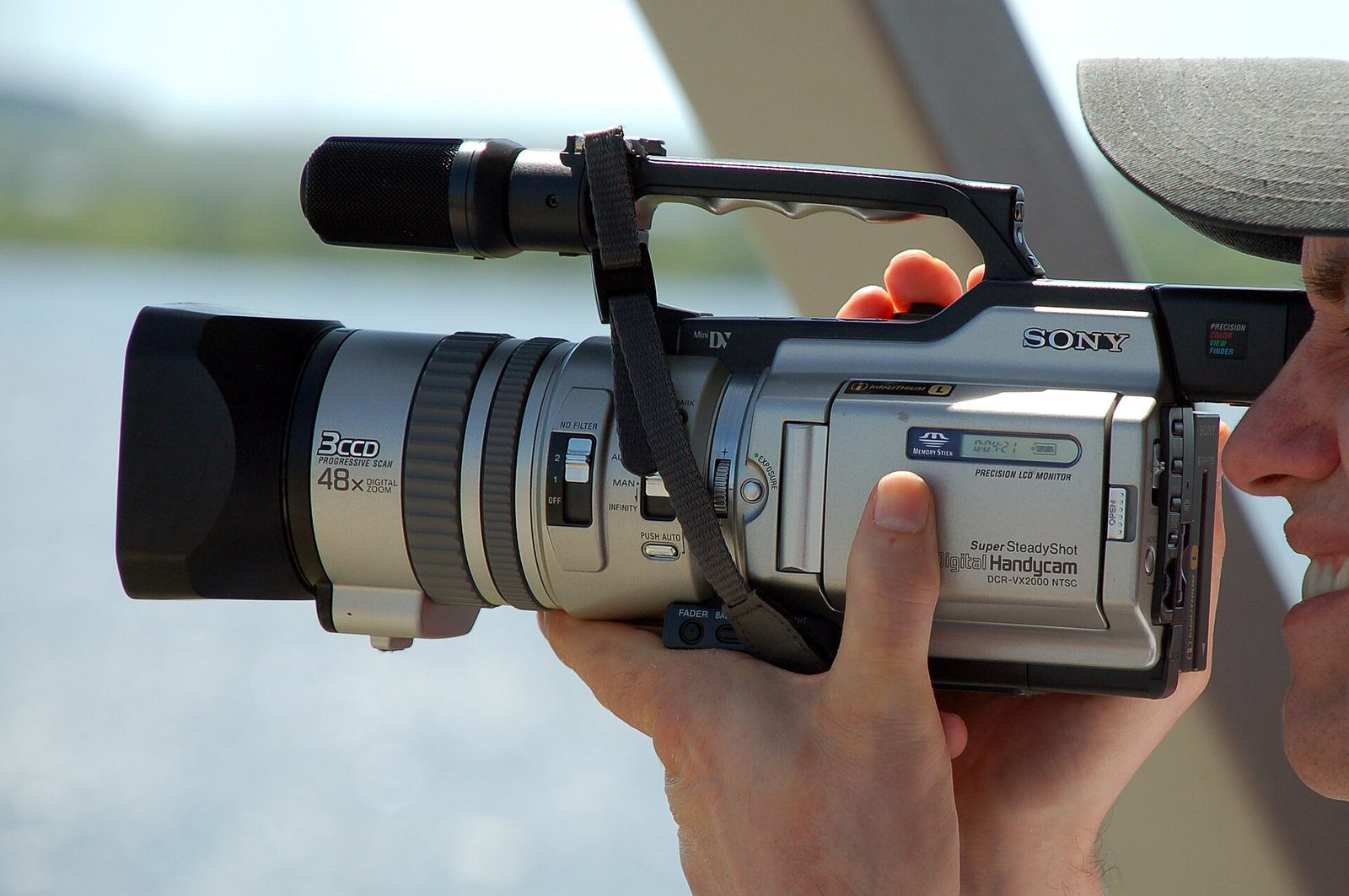
Sony was not alone for long. Canon's XL1 arrived in 1997 with interchangeable lenses, and the Panasonic AG-DVX100 followed in 2002 with 24p recording, a feature that won over narrative filmmakers. Within Sony's own range the VX1000 gave way to the DCR-VX2000 in 2000, which refined the design with improved image quality and handling, and then to the VX2100 in 2003. The professional DSR-PD150 and PD170 were essentially VX2000 and VX2100 chassis with XLR audio inputs and a broadcast-friendly feature set.
Those later models were in many ways better cameras. But the VX1000 held on for a specific reason: its colour and contrast had a character that the next-generation sensors smoothed away. Enthusiasts still argue about whether it is the better camera, and the argument is the evidence of its influence.
Why it still matters
The VX1000 showed that a camera did not need to cost a house deposit to be taken seriously. Its descendants include the DVX100, the HVX200, the Canon 5D Mark II and, in a sense, every phone now used to shoot a short film. The idea that a filmmaker can own a camera, learn it by shooting every day and edit on a laptop was proven here first.
On the used market the camera has a loyal following. Jenkem reported used units selling for roughly $400 to $500 in 2018, and prices for tested examples with accessories have been well above that since, so sold listings are a better guide than asking prices. The tape transport and head drum are the main points of failure, and parts are increasingly scarce, which is why repair technicians who still service the model are worth knowing. When buying, ask for a recording test with a clean, non-sticky tape, check that FireWire output works, and and watch for dropouts, noisy transport or any sign the tape is being chewed. A working VX1000 is a piece of recording history, and, with a fisheye on the front, it can still make a convincing 1999.