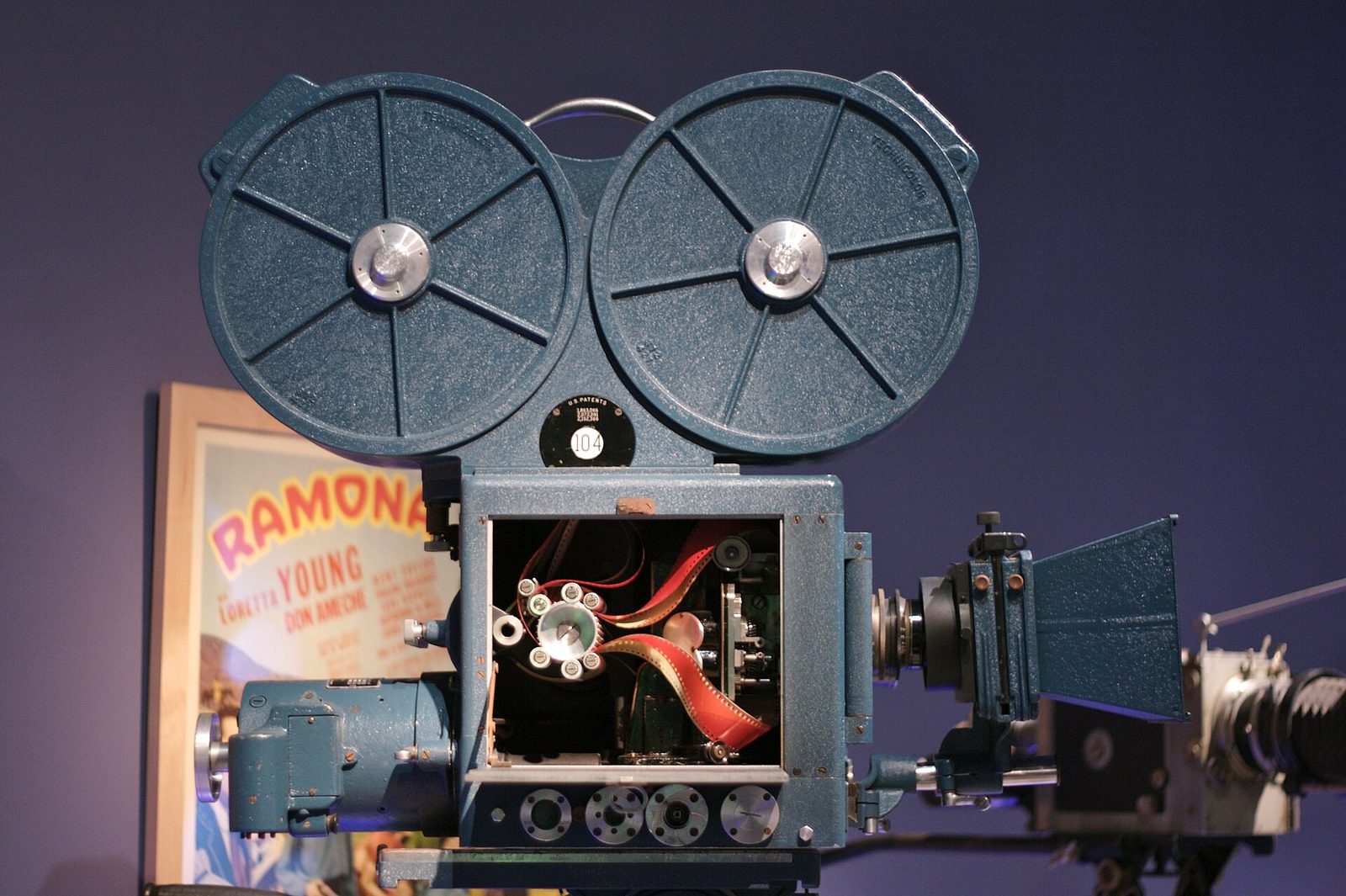
A color system that needed its own machine
Technicolor had been selling color to Hollywood for more than a decade before the three-strip camera existed, and Hollywood had mostly stopped buying. The company's earlier processes worked in two colors, a red-orange record and a blue-green one. That was enough to make a face look alive and a sky look like something, but not enough to make a lemon yellow or a lawn green. Two-color pictures had a reputation for looking faintly seasick, and after a brief vogue the studios were quietly going back to black and white.
Herbert Kalmus's answer was not a better film stock. It was a better camera. Subtractive color needs three separate records of a scene, filtered to red, green and blue, and in 1932 no emulsion could hold three accurate records in a single stack. So Technicolor built a machine that would expose three strips of ordinary black-and-white negative at once, behind a single lens, through a beam-splitter. Process No. 4, which everyone outside the company called three-strip, was ready that year. The hardware was manufactured to Technicolor's specification by the Mitchell Camera Corporation in Los Angeles, the same shop turning out the studio cameras the rest of Hollywood shot on.
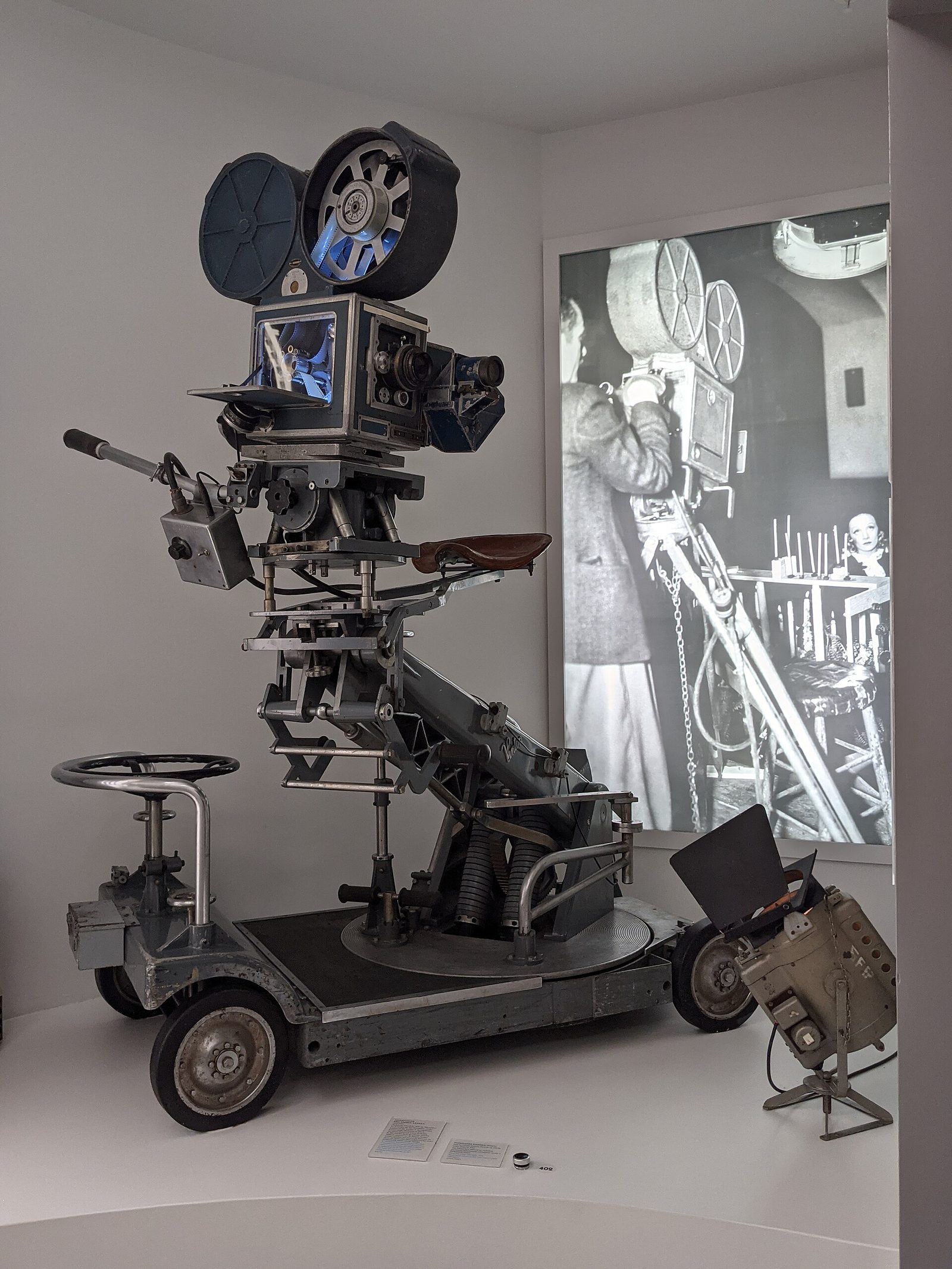
One lens, three negatives
Behind the lens sat a prism block: two pieces of glass cemented into a cube with a partially reflecting surface on the diagonal. Light came in and split. Part of it carried straight through a green filter to a gate holding one negative, the green record. The rest was turned ninety degrees onto a second gate holding two films sandwiched emulsion to emulsion, a bipack. The front film of that pair was sensitive mainly to blue; behind a red filter layer, the rear film took the red record.
That is three thousand-foot rolls of negative running at once, through two gates, in sync, behind one lens. It explains the camera's whole silhouette: the pair of enormous magazines sitting side by side on top like drums, the slab of a body deep enough to swallow the prism and both movements, and the mass. Loaded, one ran to roughly 750 pounds, and each cost something on the order of $30,000 to build in 1930s money. It did not go on a shoulder. It went on a dolly or a crane and stayed there.
The split cost light, and the filters cost more. Effective sensitivity worked out around ASA 5, absurd by today's standards and close to punishing then. Key light on a Technicolor set ran to 90 or 100 foot-candles and frequently well beyond, delivered by banks of carbon-arc Brutes. Crews on The Wizard of Oz worked in stage temperatures that regularly passed 100 degrees, in heavy costume and heavier makeup, because the camera demanded the light, and the light brought heat. The look everyone remembers was paid for in sweat.
The camera you were not allowed to buy
Technicolor never sold one. Something like twenty-nine three-strip cameras were built between 1933 and 1950, and every one of them remained company property. A studio rented the camera, and the rental arrived with people attached: a Technicolor operator who ran the machine, technicians who loaded and serviced it, and a consultant from the company's Color Advisory Service, directed by Natalie Kalmus, who had firm views on sets, costumes, makeup and lighting and the standing to enforce them. Not everyone welcomed the package. Rouben Mamoulian is said to have barred Kalmus from his set outright.
That arrangement is the real reason the three-strip look holds together so remarkably across twenty years, five studios and every genre Hollywood made. It was never a stock anyone could buy and misuse; it was a service, delivered by a few dozen machines and the small number of people who used them every working day. It also meant scarcity: with fewer than thirty cameras on earth, productions waited their turn, and a color picture got scheduled around hardware the way a modern show gets scheduled around a star.
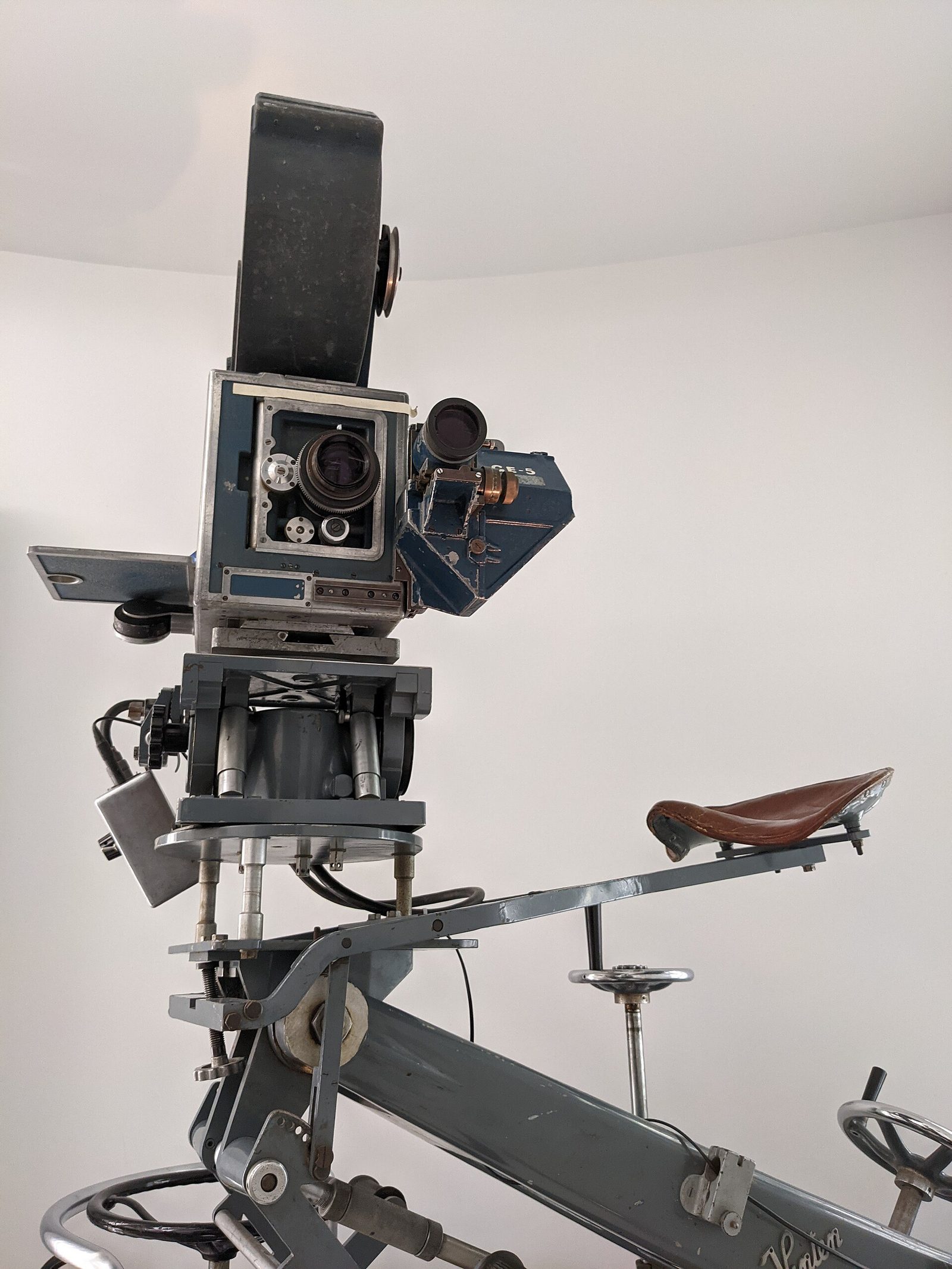
What it shot
The first thing out of the camera was a cartoon. Disney's Flowers and Trees (1932) was the first commercially released three-strip film, and an exclusivity arrangement on animation gave the Silly Symphonies a head start on the rest of the industry. Live action followed with La Cucaracha (1934), a two-reel short that worked as a demonstration piece. The first three-strip feature was Becky Sharp (1935), directed by Mamoulian and photographed by Ray Rennahan, who had been shooting Technicolor since the two-color years and would become the company's most visible cinematographer.
Then came 1939 and the two pictures that fixed the process in public memory. The Wizard of Oz, photographed by Harold Rosson, used color as an argument: sepia Kansas, saturated Oz, the saturation itself doing plot work. Gone with the Wind, photographed by Ernest Haller with Rennahan as Technicolor associate and Lee Garmes on the earliest footage, pushed the same machine the other way, toward smoke, dusk and burnt orange, proving that color did not have to shout.
What replaced it
What killed three-strip was not a better camera. It was film. Kodak's first 35mm color negative arrived in 1950 and became genuinely production-grade in 1952: a single strip, three emulsion layers, loadable into any ordinary camera. Eastmancolor was grainier and less saturated than three separate negatives, and the studios took it anyway, because it meant shooting color on the schedule, the crew and the budget of a black-and-white picture, with nobody from Technicolor standing at your elbow. Foxfire, released in 1955, was the last American feature photographed with the three-strip camera. The machines went into storage.
Technicolor the company did not go with them. Dye-transfer printing, the imbibition process that gave Technicolor prints their density and permanence, kept running on Eastmancolor negatives into the 1970s and was revived briefly at the end of the 1990s. But the camera's working life was about twenty-three years, which for a machine that defined the color of an era is a short run.
Why it still matters, and what you can actually buy
Almost none of this reaches the used market, and that is the honest answer. Because the cameras were never sold, nearly every survivor sits in an institution: the Museum of the Moving Image, the film museum in Berlin, the George Eastman Museum, the Academy Museum, the ASC clubhouse. The rare exception is news. A three-strip camera carrying the number DE-4 came up at a UK auction in April 2025 and went for around £32,500, which is collector money rather than working money. Nobody is running one, and nobody will: the stock, the lab and the people are gone.
What does reach the market is the family it came from. Mitchell bodies of the same era and the same shop still change hands regularly, usually in the low four figures for an incomplete Standard and more for a running NC with magazines and a decent movement, and the lenses, matte boxes and geared heads from that world remain useful. If you are looking at one, check the movement for wear and backlash before anything else, confirm the magazines are not warped, and treat a camera with no accessories as a shelf piece rather than a shooting tool.
The deeper inheritance is optical. A dichroic prism block splitting one lens's image onto three separate color records is exactly what sat inside every three-chip broadcast camera that followed, from the Betacam-era ENG rigs to the little 3-CCD MiniDV camcorders that put filmmaking in students' hands sixty years later. The specific machine is unbuyable and unrepeatable. The idea it was built around is in half the gear on this site.